Tuesday, December 13, 2011

Israeli Soldiers' Savagery at Mustafa Tamimi's Funeral

As posted on Electronic Intifada

Video:
For an introduction, I recommend reading the following links: Mourning Mustafa Tamimi as Israeli Soldiers Escalate Violence, and Funeral of Murdered Mustafa Tamimi Ends in More IOF Violence and Savagery.

Every time I look at the picture below, I want to laugh. Call it hysteria, call it exhaustion, call it being subjected to so many cruel emotions over the past few days after witnessing the murder of a true freedom fighter.


The pictures shows Tasneem H, @Tweet_Palestine, @_Watan, and myself among others in a human pile on the ground with Israeli soldiers beating us as we tried to prevent them from arresting us and the other activists we were protecting with our bodies. The following is our testimonies, collected and edited by me.

Me:

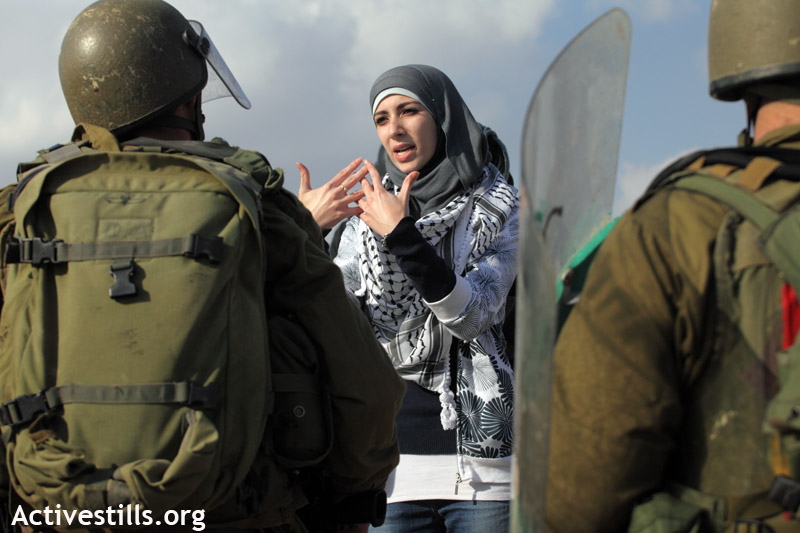
The soldiers were in their place, watching us advance. They didn’t fire tear gas; their presence itself was enough provocation. We stood in front of them, and began shouting at each of the soldiers, going from face to face with Mustafa Tamimi’s poster held up by our hands.

Our grief spilled into rage.

“Which one of you killed Mustafa?”

“Which one of you did it?”

“Which one of you has the courage to look in his sister’s eyes, the one you prevented from seeing him?”

“WHICH ONE OF YOU MURDERED HIM?”


@_Watan:

The question was asked a million times that day, and was answered by tons of tear gas, sound bombs, and physical violence. They were afraid of the question, terrified to look at the eyes of the man they killed, and we were not going to be silent any more.


Me:

Chants of “Murderers! Murderers! Murderers!” and then “Animals! Animals! Animals!” The soldiers backed away from us a few steps, perturbed. We wouldn’t let them go that easily. We followed them.


Tasneem H:

We were simply using our words…Our words and our voices of truth to question the Israeli soldiers of the murder of Mustafa Tamimi. I took out a poster with a photo of Mustafa and asked the soldier to look at the man they were responsible for murdering. I wondered to myself if their conscience would be moved at all by this. Did they still have a conscience?


Me:

I had the picture of Mustafa and was demanding them to look at it, to look at Mustafa’s eyes, the man they killed so heartlessly. One of the soldiers grabbed the picture from me and balled it in his fist. I went berserk.

“Give it back!” I shrieked. “Give it back, you animal! You’re not human give it back!” I grabbed at his hand and he shoved me vehemently. I tried again and he threw the torn picture on the ground.


@Tweet_Palestine:

All of a sudden one of them jumped on Jonathan [Pollack] who was standing next to us. They tried to arrest him and we all jumped on him trying to keep the soldiers from taking him. The soldiers kept hitting us everywhere. Then one of them tried to choke Jonathan until he fainted and was carried away.


@_watan:

They were hitting him, and choking him. The rest of the girls and I ran toward them, trying to save him from their murderous hands. His face was starting to get blue and then he passed out, and still the soldier wouldn’t let go of him. Luckily we were able to get him out just in time to save him from being killed too.


Me:

We were over the metal rink, on the road now. The spring was only across the road. The soldiers began shoving and pushing us, as we continued to demand justice for Mustafa’s murder. Sound bombs were thrown right next to us. Then we saw one international activist lying face down on the ground, his hands tied behind him. We tried to stop the soldiers from taking him with our bodies. They shoved us roughly. We screamed back. I felt a rifle butt hit me on the forehead. The commander came over and said we had five minutes to clear off. I told him we wouldn’t and for them to clear off. He pointed at me and ordered for my arrest. I felt myself being dragged by two soldiers and my biggest fear was that if my parents found out I could kiss this world goodbye. Then I felt someone grab my legs, someone else around my waist, and we all collapsed to the ground. The girls, my fellow activists, my sisters were clinging to me as hard as they could, preventing the soldiers from taking me.


@_Watan:

I turned over to see my friend Linah in the hands of two soldiers. They were arresting her, and the only thing I could remember next was holding her in my arms, and I was not alone…the girls gathered making a human pile, each holding the other so strongly to save her from being arrested.


Me:

More soldiers came and began to drag the other girls away. There was a flurry of movement and another international activist was pinned to the ground by the soldiers. We grabbed him as he became buried in our human pile. He clung to my leg. One of my arms was around my friend’s back, the other clutching another friend’s shoulder. My waist and legs were gripped by them tightly. The soldiers hit my friend on her head. One repeatedly slammed his knee in the back of the international activist we were shielding.


@_Watan:

The soldiers pushed us and we fell on the ground. We were literally on top of each other, yet we were not willing to let go. We were hit and kicked everywhere and one of them hit me on the head with the back of his gun.


@Tweet_Palestine:

We lay on the ground holding him while the soldiers hit us in every direction. I remember Linah next to me screaming the same words over and over again “You will not take any of us.” Another girl was screaming “This is for Mustafa, stay strong!” I had lost my voice by then and couldn’t scream but I moaned and cried as one soldier was trying to break my fingers away from one of the Israeli activists buried within us. Another soldier pulled me from my kuffiyeh and choked me with it, and then I let go of the activist because the pain was just too strong. I watched the soldiers pulling him away from me, dragging him on the street while one soldier put his leg above his head.


@_Watan:

They tried to choke her with her own kuffiyeh.


@Tweet_Palestine:

In a split second another soldier screamed “Take this girl!” and someone pulled my legs and I was dragged away from the girls. I knew that it meant it was over: they were going to arrest me. I was on the ground when I heard the girls screaming out my name and I then knew I was safe, I knew they would not let the soldiers take me. One soldier had his leg on me crushing me to the ground and the girls jumped on the soldiers and tried to free me.


Tasneem H:

Our human barrier made things difficult for the Israelis. We were in their way. They began violently pulling, kicking and punching the girls and I as well as the protesters they tried to arrest. I heard cries of anguish as the Israelis tried to wrench the human barrier. And in between these cries of anguish, you could still hear the words of truth continuing to be spoken by each and every single one of us.


Me:

>We were screaming and kept holding on to each other, our bodies pretzeled against each other. The soldiers were beating us as we lay there, and my anger was spent. I whispered, “You have no humanity” followed by repeating, “You’re not taking any one” over and over again.
“You are not gonna take any one of us.” Her voice broke my heart yet also made it stronger. We were sad, angry, hurt, tired, and beaten up. But we were also a pile of determination and each time they hit us we became stronger. I remember the face of the international activist we were shielding. He was looking at us as if we were the safest place on earth. It was us vs. Mustafa’s killers, Truth vs. Violence.

Me:

I looked up and realized more people from our side had arrived. They tried to talk to the soldiers. We finally but very carefully and gingerly picked ourselves off the ground as the people formed a human wall around us and we jumped over the metal rink. Another international activist was getting arrested. We jumped back and tried to grab him but we were pushed back with even more brutal force. The commander kept telling us to go. He added the word “please”. My hands were bruised, my knuckles were blue and bleeding, my body was aching. I was shaking all over. Mustafa’s picture was still in my hand. We turned back to make the long trek up the hill, and they fired tear gas aimed at our bodies to hinder us.


@Tweet_Palestine:

I ran as fast as I could then fell to the ground.


Me:

@Tweet_Palestine fainted. The men carried her and went down to the ambulance on the road.


@_Watan:

We climbed back up the hill, carrying the unanswered question and more determined than ever to continue and bring Justice to Mustafa.


@Tweet_Palestine:

I saw friendly faces around me. I realized I had fainted in the ambulance. I was terrified; what if they took any of the other girls? I should stand on my feet and go back but somehow my brain was no longer in control of my body. I was taken to one of the warm houses in Nabi Saleh, the same house I was taken to when I was attacked the last time. I just wanted to know if the girls were safe and I kept asking “Where is Linah where is @_Watan? Did they take them what happened where are they?” and then they came in from the front door and we hugged each other and started crying uncontrollably.


Tasneem H:

I still can’t comprehend why arrests were made and violence was used by the Israelis. Were our words of truth threatening to them? Were our words of truth threatening their security? Did our words of truth penetrate so deep into their conscience that caused insecurity within themselves?


Me:

They couldn’t even respect Mustafa in his death with this show of savagery.


@Tweet_Palestine:

What had we done I thought. Did it make any difference in the world when we asked these soldiers who killed Mustafa? I don’t know if it did but I felt that my voice again was my only weapon and even if these soldiers did not feel anything even if they beat me up, still I did something I raised my voice. I refused to be silenced by their guns, I refused to be silenced by the Canister that silenced Mustafa. The Israeli army and government and the Zionist movement need to understand that their weapons of murder and their methods of torture will not stop us, will not silence us. We will keep screaming and fighting and as hard as they try to silence us they will never succeed.


Sunday, December 11, 2011

No miracle yesterday in Nabi Saleh: Mustafa Tamimi murdered

As published by Electronic Intifada

“Ambulance! Ambulance!”

Mustafa Tamimi

So far, there were three people who had suffocated from the tear gas, and three people injured by rubber bullets. I saw gas, and so assumed that it was another case of suffocation. But the cries got louder, urgent, desperate — quite unlike the previous calls. Along with those around me, we began running to where the injured person lay, 50 meters away.

Screams. “Mustafa! Mustafa!”

I ran faster. I stopped. The youth I was so used to, the same ones who were always teasing and joking and smoking, were crying. One turned to me and groaned, “His head. His head is split into two!”

My stomach plummeted and I forgot to breathe. Exaggeration, I thought. Impossible. Not here. More screams of “Mustafa!”

I saw the man lying on the ground. I saw the medic with one knee on the ground, his face a mask of shock. I saw his bloodied gloved hands.

Mustafa’s sister was screaming his name. I saw Mustafa. I saw the blood, the big pool of dark red blood. I saw the blood dripping from his head to the ground as they carried him and put him in a taxi, since the ambulance was nowhere to be found. I saw other the tear-streaked faces of other activists, and all I felt was numbness.

Mustafa’s sister Ola was still screaming, so I put my arms around her as she buried her head in my chest. I was babbling, “It’s ok, he’s gonna be fine, it’s ok” but she kept on screaming. Her screams and the disturbing reactions of those around me made my legs numb. Ola then left to go to the watchtower where the taxi with her brother was, and my state of shock crumbled as I gasped out my tears in the arms of my friend.

The first protester death in Nabi Saleh

Friday, 9 December marked the second year since the tiny village began its weekly demonstrations protesting the expropriation of their land for the neighboring illegal settlement of Halamish, and the confiscation of the village’s main water supply, the Kaws Spring. It also marked the 24th anniversary of the first intifada. Fittingly, it seemed only natural the Israeli army would react with more violence than usual. But never did we expect someone to be killed. It’s too awful to think about. Nabi Saleh has a population of around 500 people. Everyone knows everyone in this tight-knit community, so when one gets killed, a big part of us dies also.

Mustafa, 28 years old, was critically injured after Israeli soldiers fired a tear gas canister at his face, and died at a hospital after his treatment was delayed by the occupation forces who had invaded the village to repress the weekly demonstration.

One difference that distinguishes Nabi Saleh from other villages with popular resistance committees, like Nilin, Bilin, Biddu and Budrus is that no one has been killed, or martyred in the protests. Beaten up, yes. Arrested, ditto. But never a death. Until yesterday.

My humanity is only human

Just before Mustafa went into the operating room, some good news came through. He had not suffered any cognitive damages to his brain, although he suffered a brain hemorrhage. There was a chance his eye might be saved. Relief washed over us. We tweeted, “please #Pray4Mustafa.”

I had pictured myself going to Nabi Saleh the next day, not the following Friday. I had imagined sitting in a room with weeping women, after passing by the somber men sitting outside. I had envisioned a funeral and an inconsolable Ola with her mother. Thank God there was a reassuring chance he would be ok. We’d make fun of his bandaged face, just like we did to Abu Hussam when a rubber bullet hit him under the eye a few weeks ago.

Then I got the call that Mustafa had succumbed to his wounds.

My humanity is only human. I hate my enemy. A deep vigorous hatred that courses through my veins whenever I come into contact with them or any form of their system. My humanity is limited. I cannot write a book titled I Shall Not Hate especially if my three daughters and one niece were murdered by my enemy. My humanity is faulty. I dream of my enemy choking on tear gas fired through the windows of their houses, of having their fathers arrested on trumped-up charges, of them wounded by rubber-coated steel bullets, of them being woken up in the middle of the night and dragged away for interrogations that are spliced with bouts of torture.

The soldiers laughed. They smiled. They took pictures of us, zooming in on each of our faces, and they smirked. I screamed at them: “Nazis, terrorists, vermin, programmed killing machines.”

They laughed at us as we screamed at them to let us through to where he was, unconscious in a taxi near the watchtower. They threatened us if we didn’t go back. We waved the flag with his blood on it in front of them. One of them had the audacity to bat it away. We shouted, “His blood is on your hands!” They replied, “So?”

I thought of Mustafa’s younger brother, imprisoned all these eight months. I thought of that brother’s broken jaw and his subsequent stay in the prison hospital. I thought of Juju (Jihad Tamimi), he of the elfin face who arrested a few days ago with no rights to see a lawyer after being wanted by the army for more than a year. I shuddered to think of the reactions of these imprisoned men from the village — Uday, Bassem, Naji, Jihad, Saeed – once they received the news.

I got the call just after 11pm Friday night. I was sworn to secrecy, since his family didn’t want to make it public yet. Anger, bitterness and sorrow overwhelmed me. I cried at my kitchen table.

I hate my enemy. I can’t go to sleep. The images are tattooed forever inside my eyelids. They yells, the wailing, the groans, the sobbing all fill my ears like water gushing inside a submarine, dragging me further into a cold dark abyss.

I sought out religion as a source of comfort, yet it didn’t alleviate the anguish. His life was written in al-Lawh al-Mahfooz (The Preserved Tablet) since before he was born. His destiny was to become a martyr. How sweet that will be in the afterlife! But here on this earth, his sister is beside herself. His mother is hurting enormously. Her firstborn gone, no longer to drink the tea she makes or to make her laugh with his jokes.

The images are tattooed forever inside my eyelids. A bloody pulp on one side of his face. The pool of blood rapidly increasing. (Mama, there was so much blood.) His mouth slightly open, lying supine on the cold road. His sister screaming, her face twisted in grief. The young men weeping, looking like little boys again.

I hate them for making us suffer

I loathe my enemy. I will never forgive, I will never forget. People who say such hatred transforms a person into a bitter cruel shell know nothing of the Israeli army. This hatred will not cripple me. What does that mean anyway? Do I not continue to write? Do I not continue to protest? Do I not continue to resist? Hating them sustains me, as opposed to normalizing with them. Their hatred of me makes reinforces the truth of their being murderous machines. My hatred of them makes me human.

I can’t sleep. The shock flows in and then dissipates, before flooding back in again. I see no justification is implementing such violence on a civilian population, no sense in the point-blank murder of a man whose rights are compromised, and whose land is colonized and occupied.

Sure as hell, you will not be forgotten. You will become an icon, a symbol, and the added impetus for persisting and continuing your village’s struggle which reflects the plight of the average Palestinian for its basic rights, equality, and justice.

I hate them for making us suffer. Hating them will give me more strength to shatter their barbaric supremacist ideology, and to bring them under the heavy heel of justice. We’ve suffered so much. I hate them for not giving credit to our sumoud (steadfastness), and so continue to kill and dispossess and imprison and humiliate us.

They killed you, Mustafa. My insides crumple. You, in front of me. My tears are drawn from the depth of my wounded soul. You were engaged to be married. You were wanted by the army because of who you are: a Palestinian who resists the occupation he directly suffers from. I think of your father being denied a permit to be with you, of your mother who had to be granted permission by them to see you in the hospital. I think of your quiet, sardonic expression.

Your screaming sister. Your blood. Your murderers’ smiles.

Thursday, December 8, 2011

24 Years Since the First Intifada


يوافق التاسع من كانون الاول القريب الذكرى الرابعة والعشرين لانطلاق الانتفاضة الفلسطينية الأولى
نحن، مجموعة من الشباب الفلسطيني، أبناء الجيل الثاني للانتفاضة الأولى، كثير منا ولد خلالها، نحني رؤوسنا إجلالاً لأبطال الانتفاضة الأولى، شهداءها وأسراها، أطفالها، شيوخها، نساءها ورجالها.
إننا نرى في الانتفاضة الأولى حقبة هامة في تاريخ شعبنا، على الأجيال أن تتناقلها وتتعلم منها، كما وأنها شكلت نموذجاً تستلهم منه شعوب العالم في نضالها من أجل الكرامة، العدالة والحرية.
بهذه المناسبة نؤكد إيماننا بالمقاومة الفلسطينية الشعبية كجزء أساسي في نضالنا من أجل الحرية وتحصيل حقوق الشعب الفلسطيني، غير القابلة للتصرف أو المساومة أو التفريط، وبمواصلة النضال حتى تحقيق الحرية والعودة.
عليه، نتوجه بنداء لكافة أبناء شعبنا في الوطن والمنفى بإحياء هذه الذكرى من خلال تكريم صانعي الانتفاضة وأبطالها، ومواصلة طريقهم.
كما نتوجه بنداء لكافة المدونين الفلسطينيين في الوطن والمنفى بتخصيص مدوناتهم يوم التاسع من كانون الاول لنشر قصص أو مقابلات مع شخصيات عايشت الانتفاضة الاولى أو مقالات أو صور وأشرطة توثق الانتفاضة، وندعو كل مبدع فلسطيني، أن يقدم شيئاً في هذه المناسبة وفق ما يراه مناسباً وممكناً.
عاش شعبنا وتحيا فلسطين
---
"December 9th this year is the 24th anniversary of the First Palestinian Intifada.

We, a group of Palestinian youth, children of the First Intifada, bow in front of the heroes of the Intifada, its martyrs, children, elders, women and men.

We view the Intifada as a significant era in the history of the Palestinian people that future generations need to learn from, and that many have used as a model in their struggle for justice, dignity and freedom.

On this occasion we affirm our belief in the Palestinian Popular Resistance, as a principal part of our struggle for freedom and Palestinian rights that is not open for compromise. We support the struggle to achieve freedom and the right of return.
Based on that, we are calling out to all our people in Palestine and in exile to commemorate this anniversary, by honoring the heroes of this Intifada and to follow in their footsteps.
We are also calling out to all the Palestinian bloggers in Palestine and in exile to dedicate their blogs on the 9th of December to honor the people of the First Intifada through writing stories from the Intifada or conducting interviews with the heroes, publishing videos or photos etc. We also call on Palestinian artists for a dedication in honor of the Intifada.

Long live our people and long live Palestine

For more activities, calls for action, posts, and news follow #Intifada1 on twitter

Sunday, November 27, 2011

An Israeli Soldier Cares For My Safety


The following took place Friday, November 25th in the village of Nabi Saleh during its weekly protest against the Israeli occupation. A group of protesters managed to reach the hill, where a few hundred meters below was the village spring the illegal settlement of Halamish took by force. If you're not an Israeli settler (or their ilk), you are prevented from getting even close to the spring.


“Watch out. You might get hit by a stone.”
For a split second, various images flitted through my mind. One was me throwing my head back, convulsing and positively howling at a full moon in a deserted forest. Another was a perverse natal instinct to hug the soldier, before throttling him into seeing reason. The third was a kaleidoscope of colors. It wasn’t a full scale explosion, but my mouth became unhinged with “dignified” fury.
“You dare to stand in front me, and pretend that you care about my safety? You’re pretending to be worried if a rock hits me? How dare you, when you come here every week—and not just on Fridays but throughout the week— and terrorize this village by spraying them with skunk water, firing tear gas and rubber bullets and live ammunition at their children, at the women, the men! How many children have you arrested? How many houses have you raided? How many have suffocated from the tear gas fired deliberately in their homes, how many kids have you fired at? You don’t care about any of that!”
His little comment solicited the same reaction from the other sabaya/young women around me. We were shouting over each other, then pausing to listen, then picking up on each other’s sentences with added vitriol.
“Anyway,” I added, more calmly. “These stones have a special homing device built into them; they only hit occupiers.”
Two rocks then crashed into the protective shield of one soldier standing to my right. The one in front of me was completely flummoxed.
“Where are you from?” I asked. “Brooklyn?”
“Fuck Brooklyn.” His muddy green eyes were shocked. At that moment, it hit me. I felt so sorry for him.
The commander then marched up. “Go back ten meters,” he barked.
We stayed where we are. If we were guys, there would have been pushing, shoving, anything to provoke us and for them to justify firing from close range. But we were four Palestinian women with a few other Israeli and international activists. Never underestimate the regal wrath of Palestinian women. We will go batshit crazy on you.
“Please go back ten meters.”
Ah, the order turned into a request, which brought about another stab of the kaleidoscope colors.
“You go back! This is Palestinian land, you are the ones encroaching upon this land, and you are the ones perpetuating the colonization of an indigenous people, so you get off this land!”
The commander stared.
My sister and her friend were enjoying themselves a bit too much with their directed banter at them:
“Do you bleed differently from me? We bleed the same blood!”
“Free your minds! Zionism has imprisoned you!”
“You are a victim of your own government’s policies!”
“Put down your gun, we are protesting peacefully!”
A couple of teenagers baffling the Israeli soldiers in front of us by tearing into their state-fed propaganda. I was thoroughly amused, to say the least. I turned to another soldier.
“Isn’t this much better than firing tear gas canisters at us? Look, we’re having a dialogue! We’re talking. We’re not negotiating, since that would imply two equal parties, but we’re conversing!”
One of the girls pointed to another soldier’s face.
“You’re bleeding,” she said.
“From the rocks you throw at us.”
Kids with guns. This was a new unit. A young, scared unit who broke their own rules by replying back.
It was such a ridiculous situation. I touched his submachine gun. “Look at you, decked out like you’re about to face an army. You’re wearing a helmet, knee pads, bulletproof vest, and this gun of yours that shoots sound bombs and tear gas and bullets. We are armed with nothing. Do you realize how stupid you look?”
“You are armed with rocks.” The eyes shifted, the feet shuffled.
Mr Muddy Green Eyes. I felt so sorry for him.

Wednesday, November 23, 2011

Are the Freedom Rides a detour for the struggle?

My latest op-ed published on Electronic Intifada


Last week, six courageous Palestinians attempted to defy racism, segregation and apartheid by boarding Jewish settler-only buses in the hopes of reaching Jerusalem, a city off limits to Palestinians in the West Bank.

Activists and bloggers, intellectuals and independent journalists all supported the Palestinian Freedom Riders for their US civil rights movement-inspired act. Emotions ran high as it was clearly emphasized that racial supremacy still exists in this day and age, and highlighted were the harrowing parallels between oppression in the Jim Crow US South and in Palestine.

But crucial differences remain — for one thing, the indigenous population of Palestine is occupied by a colonial settler population; for another, there are two separate and completely different systems for Palestinians and Israelis, such as military and civilian courts, respectively, rather than a two-tiered system.

However, the symbolic, media-friendly act — and its debatable relevance to the average Palestinian — begs some important questions.

There is no doubt that what the six Freedom Riders set out to achieve was of significance. They challenged Israel’s arbitrary regime of exclusive settler-only networks that serve the illegal settlements throughout the West Bank; they highlighted the human rights abusing complicity of two companies, Veolia and Egged, which operate dozens of the segregated bus lines; and they fought for an essential basic right: freedom of movement. Apartheid is very much alive in occupied Palestine. It is our reality that we breathe through our congested lungs every minute of our waking lives.

Anti-colonial vs civil rights struggle

The Freedom Rides were intended as an anti-colonial act mirroring a previous and successful civil rights one. But our struggle is not a civil rights one. It is a struggle against a foreign occupation. We must be calling for the liberation of an indigenous population under a devastating settler-colonial rule, one that has continued to ethnically cleanse, commit large scale massacres, impose collective punishment, imprison and restrict the movement of Palestinians for decades.

The intentions of the Freedom Rides were transparent and clear, as stated by the second press release in which they stated that they do not seek to desegregate the settler buses, as the “presence of these colonizers and the infrastructure that serves them is illegal and must be dismantled” (“Palestinian Freedom Riders to ride settler buses to Jerusalem,” 13 November 2011).

But by using a tactic specific to the US civil rights movement, one risks the interpretation that Palestinians are asking for the same rights as settlers.

As one young activist critical of the Freedom Rides commented to me: “Do you obstruct settlements by demanding to get on a bus? What you are demanding when you attempt to ride a bus is the right to ride it, not the right to say I don’t want this bus here to start with. You don’t ask to ride the bus if you don’t want the bus in your neighborhood.”

She added, “There is an illegal railway in Jerusalem constructed on [illegally-occupied] territory that endangers children as [trains] pass by in residential areas … if I were to object to this train’s existence, do I make a protest and ask to ride on the train or do I sleep on the train tracks to stop it from coming to my area?”

Indeed, many Palestinians take issue with settlers factoring in a key role in the Freedom Rides event, saying that it blurs the lines of normalization of occupation and apartheid.

The boycott, divestment and sanctions movement defines normalization as “the participation in any project, initiative or activity, in Palestine or internationally, that aims (implicitly or explicitly) to bring together Palestinians (and/or Arabs) and Israelis (people or institutions) without placing as its goal resistance to and exposure of the Israeli occupation and all forms of discrimination and oppression against the Palestinian people” (“ Israel’s Exceptionalism: Normalizing the Abnormal,” the Palestinian Campaign for the Academic and Boycott of Israel, 31 October 2011).

Although the boycott call has been endorsed by nearly 200 Palestinian civil society organizations and political parties, the working definition of normalization of the boycott movement differs from many Palestinians’ personal definitions of normalization. Some view any association with settlers as normalization, others a bit more nuanced but still don’t like the idea, and still others consider it within the specific context in question. The reactions like that of the young activist I mentioned exemplify this concern.

Honor Palestinian resistance

The positive coverage in the Western corporate media shows that the Freedom Rides action appealed to foreign consumption. But it’s not up to Palestinian resistance to appease the tastes of Western audiences. We have our own lively and proud history of resistance stretching back to the days of British Mandate rule, exemplified by popular strikes, boycotts and demonstrations.

Moreover, tactics tailored to western tastes and reactions distract from mobilizing Palestinians on the ground into an effective popular resistance movement. The first Palestinian intifada was a true popular uprising in every sense. Palestinian society collectively organized strikes and rallied together. The level of cooperation was present in families hiding resistance fighters, and in mosques and private organizations hosting educational studies after the universities and schools were shut down.

Today, activism and popular resistance isn’t centralized but, rather, is scattered throughout particular villages and parts of cities. For an act that carries huge potential and holds meaningful implications by connecting the current reality of Palestinians to the history of other oppressed societies, there should have been more awareness on the Palestinian street of its occurrence.

The Freedom Rides event was very exclusive. This is in stark contrast to the recent Freedom Waves mini flotilla campaign, where activists were directly involved with producing, translating, revising and distributing fact sheets and press releases and statements for the UN and mobilizing people on the street and engaging with the media. It was a microcosm of popular resistance as activists from throughout historic Palestine all worked together efficiently to send the message of ending the blockade on Gaza and demanding protection for the passengers, and this message was directed not only at the West and foreign press but to Palestinians as well.

Any act of civil resistance should be inclusive of many sectors of Palestinians. The same efforts that the Freedom Riders took to coordinate with organizations in the US and elsewhere should have also happened in Palestine.

And while the history of other oppressed peoples unquestionably offers its lessons to us as an occupied population, we should be well aware of our own unique history of resistance, and the need for our movement to encompass all sectors of Palestinian society and the historic demands of our anti-colonial struggle.

Saturday, November 19, 2011

Palestinians clarify goal of "Freedom Rides" challenge to segregated Israeli buses

As posted on Electronic Intifada

Watch live streaming video from freedomriders at livestream.com


There were worries from some Palestinian youth regarding the first press release of the Freedom Rides. Reading between the lines, the wording could have been better and the purpose of the mission was in danger of being intrepreted as Palestinians demanding equal rights with the illegal Israeli settlers instead of the proper message of divulging to the world one aspect of the apartheid regime they live under. The second statement released yesterday 13 November is longer but more comprehensive and expressive:

FREEDOM RIDERS
Sunday, November 13, 2011*
For Immediate Release*

* Palestinian Freedom Riders to Ride Settler Buses to Jerusalem
* Inspired by the Freedom Rides of the US Civil Rights Movement Palestinian activists will attempt to board segregated Israeli settler buses to occupied East Jerusalem

[Ramallah] Groups of Palestinian Freedom Riders will attempt to board segregated settler buses heading to Jerusalem through the occupied West Bank this Tuesday November 15, in an act of civil disobedience that takes its inspiration from the US Civil Rights Movement Freedom Riders aim to challenge Israel's apartheid policies, the ban on Palestinians' access to Jerusalem, and the overall segregated reality created by a military and settler occupation that is the cornerstone of Israel's colonial regime. While parallels exist between occupied Palestine and the segregated U.S. South in terms of the underlying racism and the humiliating treatment suffered then by blacks and now by Palestinians, there are also significant differences. In the 1960s U.S. South, black people had to sit in the back of the bus; in occupied Palestine, Palestinians are not even allowed ON the bus nor on the roads that the buses travel on, which are built on stolen Palestinian land.

In undertaking this action Palestinians do not seek the desegregation of settler buses, as the presence of these colonizers and the infrastructure that serves them is illegal and must be dismantled. As part of their struggle for freedom, justice and dignity, Palestinians demand the ability to be able to travel freely on their own roads, on their own land, including the right to travel to Jerusalem.

Palestinian activists also aim to expose two of the companies that profit from Israel's apartheid policies and encourage global boycott of and divestment from them. The Israeli Egged and French Veolia bus companies operate dozens of segregated lines that run through the occupied West Bank, including East Jerusalem, many of them subsidized by the state. Both companies are also involved in the Jerusalem Light Rail, a train project that links illegal settlements in East Jerusalem to the western part of the city. By facilitating population transfer into occupied Palestinian territory, Egged and Veolia are actively and knowingly complicit in Israel's settlement enterprise, which the International Court of Justice has determined to be a breach of international law, and particularly Article 49 of the Fourth Geneva Convention prohibiting an occupying power from transferring part of its population into occupied territory.

This Tuesday, Palestinian Freedom Riders will head to Jewish-only bus stops in the West Bank and attempt to board the settler buses. Palestinians understand that this act of nonviolent disobedience may result in violent attacks and even death at the hands of Israeli settlers that are to Israel what the Klu Klux Klan was to the Jim Crow South, or the authorities that protect them. Nonetheless, the Freedom Riders believe that this act of civil resistance is necessary to draw the attention of the world to the immorality of Israel's occupation and apartheid system as well as to compel justice-loving people to take a stand and divest from Egged, Veolia, and all companies that enable and profit from it.

The Freedom Riders will be joined by activists from all around the world who will stage activities in their cities that highlight the systematic oppression of Palestinians and the need to divest from Egged and Veolia.

For inquiries send an email to palestinianfreedomriders@gmail.com

Background

The buses that the Freedom Riders will be boarding are operated by the Egged, the largest Israeli public transportation company, and by the French transnational company Veolia. Both companies are complicit in Israel's violations of international law due to their involvement in and profiting from Israeli's illegal settlement infrastructure. Palestinian Freedom Riders endorse the call for boycotting both companies, as well as all others involved in Israel's violations of human rights and international law.

In July 2011, an Egged subsidiary won a public tender to run bus services in the Waterland region of the Netherlands, north of Amsterdam. The company makes money from trampling on the rights of Palestinians and has been a target of the boycott, divestment and sanctions (BDS) campaign, which is endorsed by an overwhelming majority of Palestinian civil society. The Freedom Riders call on the people of the Netherlands to sever all dealings with companies, like Egged, involved in human rights violations.

Veolia has been a target of an international divestment campaign for running bus lines through the West Bank connecting settlements to Jerusalem and for its involvement in the Jerusalem Light Rail which connects Israel's illegal settlements in and around occupied East Jerusalem to the western part of the city, thereby directly servicing the settlement enterprise.

Over 42 percent of Palestinian land in the West Bank has been taken over for the building of Jewish settlements and their associated regime (including the wall which was declared illegal by the International Court of Justice in 2004), depriving local communities of access to their water resources as well as agricultural lands. Settling Israelis in the occupied Palestinian territory constitutes a war crime according to the Fourth Geneva Convention[1] and the Rome Statute of the International Criminal Court.[2]

The occupied West Bank and Gaza Strip constitute only 22 percent of the Palestinian homeland from which over 750,000 Palestinians were ethnically cleansed in 1948 when the state of Israel was created. Since then, Palestinian refugees have been languishing in refugee camps and other places of exile, denied the right to return to their homes.

>Settlements' infrastructure includes hundreds of kilometers of segregated roads that are forbidden for Palestinians to use. They carve deep into the West Bank further separating Palestinians and their cities and villages from each other.

[1] See "Israel's settlement policy is a war crime under the Fourth Geneva Convention," The Palestinian Center for Human Rights, Gaza, highlighting the relevant articles of the Fourth Geneva Convention to support the determination that settlements are a war crime, at http://www.pchrgaza.org/Intifada/Settlements.conv.htm; see also "Demolitions, new settlements in East Jerusalem could amount to war crimes - UN expert," UN News Centre, June 29, 2010, at http://www.un.org/apps/news/story.asp?NewsID=35175&Cr=Palestin&Cr1.

[2] Article 8(2)(b)(viii) of the Rome Statute of the International Criminal Court prohibits "[t]he transfer, directly or indirectly, by the Occupying Power of parts of its own civilian population into the territory it occupies."


Arabic version

University campuses across the US have jumped on board (no pun intended) on the idea and have planned for similar actions to be staged tomorrow to raise more awareness in their communities. The wonderful author and activist Alice Walker, who was involved in the US Civil Rights movement in the 1960s conveyed her solidarity and support for the Freedom Riders on her blog. It is now less than 24 hours before the brave Freedom Riders of the 21st century attempt to break the mold of oppression, indignity and intolerable suffering in order to lead a path to justice, freedom, and equality. Will Israel's reaction be its own well trodden path of violence infused with blinding hysteria and hatred?

* Twitter: @palfreedomrides
* Email: ridingforfreedom@gmail.com
* Wesbite: palfreedomrides.blogspot.com
* Live Streaming
* Facebook: Palestinian Freedom Rides

Tuesday, 15 November 2011. The whole world will be watching.

Friday, November 11, 2011

Freedom Rides in the 21st Century

As posted on Electronic Intifada


Western media lamentations of Palestinians needing figureheads such as a Gandhi or a Martin Luther King to effectively resist the Israeli occupation are self-righteous and uncalled for. An occupied people under international law can resist in any way they want. However, raising awareness and challenging the occupation in creative ways definitely doesn't hurt the Palestinian cause, and so a group of Palestinian youth announced that on Tuesday, 15 November (incidentally, the PA's self-designated Palestinian Independence Day) they will replicate the 1960s American civil rights movement, specifically the Freedom Rides --which celebrate its 50th anniversary this year.

Just as the American freedom riders -- black and white -- boarded segregated buses together, defying Jim Crow segregation, the Palestinian freedom riders will board segregated Israeli buses that pass through Jewish-only settlements.

This act will highlight the apartheid realities of Israel which govern the Palestinians, the same laws and practices that Judge Richard Goldstone so readily dismissed in his recent op-ed in the New York Times. By drawing comparisons with the US civil rights movement, the Freedom Rides of the 21st century will undoubtedly prove how all oppressed societies are ultimately connected. Palestinians on those buses risk putting themselves in danger, that is if the three-pronged fury of fanatical settlers, the Israeli army, and other Israeli citizens rains down upon them like the wrath of an exclusivist God. They also risk being arrested for days or months or years under Israel's military law. The press release is below:

7 November 2011

On Tuesday, November 15th, 2011, Palestinian activists will reenact the US Civil Rights Movement’s Freedom Rides to the American South by boarding segregated Israeli public transportation in the West Bank to travel to occupied East Jerusalem.

Next Tuesday, Palestinian activists will attempt to board segregated Israeli public transportation headed from inside the West Bank to occupied East Jerusalem in an act of civil disobedience inspired by the Freedom Riders of the U.S. Civil Rights Movement in the 60’s.

Fifty years after the U.S. Freedom Riders staged mixed-race bus rides through the roads of the segregated American South, Palestinian Freedom Riders will be asserting their right for liberty and dignity by disrupting the military regime of the Occupation through peaceful civil disobedience.

The Freedom Riders seek to highlight Israel’s attempts to illegally sever occupied East Jerusalem from the rest of the West Bank, and the apartheid system that Israel has imposed on Palestinians in the occupied territories.

Several Israeli companies, among them Egged and Veolia, operate dozens of lines that run through the occupied West Bank and East Jerusalem, many of them subsidized by the state. They run between different Israeli settlements, connecting them to each other and cities inside Israel. Some lines connecting Jerusalem to other cities inside Israel, such as Eilat and Beit She’an, are also routed to pass through the West Bank.

Israelis suffer almost no limitations on their freedom of movement in the occupied Palestinian territory, and are even allowed to settle in it, contrary to international law. Palestinians, in contrast, are not allowed to enter Israel without procuring a special permit from Israeli authorities. Even Palestinian movement inside the Occupied Territories is heavily restricted, with access to occupied East Jerusalem and some 8% of the West Bank in the border area also forbidden without a similar permit.

While it is not officially forbidden for Palestinians to use Israeli public transportation in the West Bank, these lines are effectively segregated, since many of them pass through Jewish-only settlements, to which Palestinian entry is prohibited by a military decree.

Monday, October 17, 2011

Prisoner of the Day: Hazem Elaydi

The Prisoner of the Day Campaign was created as a response to the alarming yet expected media coverage discrepancy regarding the recent prisoner deal arrived at by Hamas and Israel. While the world is holding its breath for that portentous moment when Israeli Corporal Gilad Shalit is back in his mother's arms after five years of captivity in the Gaza strip, the 1027 Palestinian prisoners are treated as an empty numerical entity. This campaign will devote each day for a Palestinian prisoner, either included in the deal or not, as a means of awareness and a reminder that Palestinians will always be humans.

Prisoner of the Day: Hazem Elaydi

Hazem Elaydi is from the Maghazi refugee camp in Gaza. He was a young man who loved to read, and would get his hands on every newspaper he could get. In the summers he would help out at his father's store but would end up reading the stacks of newspapers he took with him instead. He was a highly intelligent knowledgeable person with an interest in knowing what was happening in places around the world. Everyone who knew him recognized that he had great potential. He was generally well-liked and respected by people owing to his pious and conservative nature.

Hazem Elyadi as a young man

He was majoring in Chemistry at An-Najah University in the West Bank, but at the onset of the first intifada he happened to be visiting his family back in Gaza when the borders were closed, thus effectively ending his education as it was impossible to get back.

During the first intifada, it was common policy for Israel to send out orders for random young Palestinian men to report to Israeli officials for interrogation. Usually it meant nothing, but when Hazem went it turned out to be more than just a routine interrogation. He was kept in administrative detention for three months as the Israelis attempted to gather charges against him. Two days before he was due to be released, two inmates who were being tortured told similar stories about Hazem. Back then, policy dictated that if two people gave the same testimony, the person it was concerning had to confess. After being beaten and tortured, Hazem confessed to false claims and was sentenced to four consecutive life sentences without the courtesy of being given a fair trial.

Hazem's niece Fidaa got to know her uncle via secret phone calls. Cell phones of course are forbidden in prisons and are smuggled in. After spending the winter in Gaza, Fidaa wrote an eloquent piece highlighting how love of a family member imprisoned cannot be stunted the cold prison walls. She also drew attention to the conditions the prisoners undergo, and the humiliation they must routinely suffer. Since 2007, Hazem hasn't received any family visits as part of the extensive collective punishment on Palestinians in Gaza, who were forbidden from seeing their loved ones behind Israeli bars.

The amazing news is that today, Hazem Elyadi was released as part of the prisoner swap deal between Hamas and Israel. After 21 years in Israeli jails, he is now back in Gaza in his ailing mother's arms. I asked Fidaa how the celebrations were most likely going to pan out. She replied,

"As far as I know, every relative we have--no matter how distantly related-- will gather to welcome him. I'm assuming over 200 people will gather. It'll be chaos! I'm guessing some animals will be slaughtered for the occasion and a huge feast will take place. I'm also guessing that the women have been working for days making sweets to pass around to family, friends, and neighbor. The celebration will begin with his welcome at the Rafah crossing and then an hour's drive to Khatiba Square in Gaza City where thousands will gather and all of the prisoners will be shown a hero's welcome. My relatives will be travelling in busloads to Gaza City to celebrate and welcome the prisoners. The they will go to my uncle's house where our matriarch, my grandmother, lives. They have decorated the house days in advance. The wedding-like festivities will likely begin at sunset and continue throughout the night."

Fidaa is a law student in Texas. She desperately wishes she was there to welcome back her uncle and to witness the happiness etched on her family's faces in Gaza as they receive Hazem. This is where technology is truly a blessed thing.


"I wish with every ounce of my being that I could be there with them. For the first time in weeks, I won't be spending 8 hours in the library after class. I'm going straight home so my mother and I can video chat with out relatives in Maghazi and Deir il-Balah refugee camps. I will speak to my uncle, screen-to-screen, at 4 pm Dallas time, 12 am Gaza time."

Fidaa will also celebrate the release of her uncle in her own way. She made brownies for her 90 person law school class, a great idea as not only do the rest of the students enjoy the brownies but also opens their eyes to the plight of Palestinian prisoners, and what the released prisoners mean for their families away from the corporate mainstream media that paint the prisoner deal from only one side (that of Israeli Corporal Gilad Shalit.)

So what's next for Hazem? Well, as he was incarcerated as a young man he never married. Fidaa's aunts already have that covered though, as those living in different countries in the Middle East are making travel plans to Gaza as soon as possible. Fidaa thinks that a wedding is already in the making, with a bride already found!


"Rumor has it that the family has already found him a bride, and they're simply waiting for his approval and within a week there will be an engagement. I will not be surprised if his wedding is in less than a month! I'm hoping they will wait until the end of December so that I have a chance to go to Gaza after finals and make it to the wedding."


It seems like the Elyadi family have a lot to celebrate over the next few months. Hazem's return, Eid with Hazem, Hazem's engagement, Hazem's sahra [nighttime party] before his wedding, and Hazem's wedding.

All the best to Hazem Elyadi, an innocent man who spent twenty one oppressive years in the Israeli occupation's jails.

Prisoner of the Day: Majd Ziada

The Prisoner of the Day Campaign was created as a response to the alarming yet expected media coverage discrepancy regarding the recent prisoner deal arrived at by Hamas and Israel. While the world is holding its breath for that portentous moment when Israeli Corporal Gilad Shalit is back in his mother's arms after five years of captivity in the Gaza strip, the 1027 Palestinian prisoners are treated as an empty numerical entity. This campaign will devote each day for a Palestinian prisoner, either included in the deal or not, as a means of awareness and a reminder that Palestinians will always be humans.

Prisoner of the Day: Majd Mahmoud Ahmad Ziada


Majd Ziada was barely out of his teens when he got arrested by the Israeli Occupation Forces. It was at the height of the second intifada in 2002 when the Israeli army during its collective arrest campaign detained Majd on the evening of the Israeli invasion of the twin cities Ramallah and Al-Bireh. He was 19 years old.

Before he got arrested, Majd enjoyed playing basketball at Ramallah's First Club in al-Tira. With the outbreak of the second intifada however, life became more grim. He lost his best friend who was killed by the Israeli soldiers, and Majd himself was once used as a human shield where he was forced to walk in front of the Israeli tanks. Just before he was due to take his final exams of his senior year (tawjehi) the Occupying Army raided his home and dragged him out where he was bundled into a jeep. His family knew nothing about his whereabouts or condition for fifty days after his arrest. They then learned from a newspaper that he had been beaten up in custody.

When he was four years old, Majd witnessed the arrest the of his politically active father, Mahmoud. He told his dad, "Don't worry Baba, I will take care of my mother and baby sister." In the absence of his father, his mother worked to support the young family. It was left up to Majd to look after his baby sister Raya, as he carried her, fed her, put her to sleep. His father was in and out of prison a total of seven times, and was never once convicted of anything. But because of the mangled policies of administrative detention, it was "legal" to arrest him and keep him detained for any period of time without ever knowing the reason why.

In a 2009 interview, Mahmoud Ziada recalls: "The Israeli soldiers searched our home, then they handcuffed me and took me to the military jeep that was standing in front of our house. As I was climbing into the jeep, my five year old son Majd shouted through the window 'Baba Mahmoud, don't lose courage!'"

Majd accompanied his mother to visit his father in prison, and he used to go with her to national meetings. At demonstrations he would shout national slogans and sing national songs.

Majd with his father and sisters making a human tower

Initially, and for absolutely no reason, Majd was sentenced to 15 years in prison. At his appeal, the military court (which tries all Palestinian prisoners) gave him an extra 15 years for a defiant statement he gave:

"I do not believe in this court because it is an unjust one. I am opposed to the occupation and I will remain opposed to the occupation, so go ahead and sentence me. I will join my brothers and sisters in jail and consider it a badge of honor."

Majd suffers from a life threatening condition. He lost his hearing in his right ear due to acute ear inflammation, which could have been prevented had he received adequate medical attention. There is a huge risk that the disease could spread to the rest of his body, rendering it fatal, and so he desperately needs surgery.

His family are granted rare permission to visit him in prison. For the first seven years of his imprisonment only his youngest sister Hurriyah was able to visit him due to her status as a minor. After she turned sixteen, visits became more harder to procure. Afterwards limited permission was given to their mother to visit him once every few months. Last year Majd's father was finally granted permission by the Israeli Prison Service to see his son. The last time Majd saw his family was two months ago, after a five year gap. Hurriyah and her mother were the lucky ones to go, as only two people are allowed on visits.

His sister Hurriyah has this to say: "I haven't been able to hug my brother Majd Ziada for ten years because of the Israeli Occupation. When Majd was imprisoned I was 12, now I am 22."

Majd Mahmoud Ahmad Ziada has been on hunger strike for 21 days.