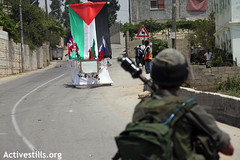
Thursday, August 25, 2011

Palestine's Rollercoasters

They're big, they're loud, and they're orange. They travel at the speed of light and are known to be suicide friendly vehicles. They strike fear in the hearts of first time drivers and are at the receiving end of a barrage of heavy verbal abuse.

They are...fords.


No Palestinian experience is complete without a life-threatening ride in one of those babies. The semantic history of the designated name is unknown, since they definitely do not bear semblance to any Ford model. Nevertheless, they are the great white sharks on the street, and if you thought that was a bad enough analogy get this: If Hitler was a car he'd be some clunky pick-up truck on a farm next to these venomous Bugattis.

Unless you're bequeathed your own personal car and laugh in the face of the perilous winding roads to Birzeit University, the fords are the only means of transportation. Since I live on the main street, I don't have to go to downtown Ramallah to the ford depot. Rather, I stick my finger out and wait for one to stop. On windy days, as my scarf flutters and my whiteness is laid out for all the world to see, I have no problem in flagging down a ford. For three years I have feared for my life twice a day going to and coming back from the university. They know no other language other than speed. The drivers have no qualms in driving on the wrong side of the road in a bid to reach their destination in the quickest time possible. They especially relish the challenge of facing off with a car coming up on its rightful side of the road, usually winning the challenge by making the other car veer off the road at the last second.

Last time that happened my friend screamed at the driver, "You have ten other people in the backseats whose lives you're responsible for- SLOW DOWN!!"

The reply was offhand and cool: "Don't worry, I have fifteen years of experience."

Some drivers act as if you're not there. Others steal covert looks at you in the mirror before inquiring about personal life, whether you're married or engaged or looking to settle down. Still others tell you their whole life story. One driver kept up a pleasant conversation with me and gave me a stack of business cards to pass out for his niece's new salon. Another driver began to tell me about his village and offered me a bunch of miskawi apricots. I was touched by his kindess, so I accepted politely. He then gave me half the bag to eat. When I went home that day, I relayed to my mother the driver's generosity.
"Inshallah you accepted the apricots?"
"Of course."
"Did...did you eat them?"
"Yes Ma, isn't that the next step to take after being offered food?"
"You ATE them?! Did I raise a fool? Are you out of your mind? Does your smartness only show itself in your studying? What if the apricots were sprayed with something? What if they weren't apricots at all? What if they were laced with drugs? That's it, I'm calling your father."

The drivers come in all shapes and sizes. Kids barely out of their teens, men with wizened faces, most of them smoking addicts. Some are oblivious to their passengers, viewing them simply as money generators, while others give you a sympathetic look as the floozy in front of you shuts the window on a sweltering day so that the breeze won't mess up her hair.


One time the ford I was in stopped to pick up an old man. He looked like a Bedouin, with his abaya and heavy accent. The old man lit up a cigarette and the ashes flew back right at me, getting in my clothes and bag. I sighed waspishly, and the driver caught my eye. He turned to the old man next to him.
"Uncle, you have to put put your cigarette. I'm sorry but that's the law."
"What law is this? I'm going to keep smoking."
"It's a new law, Uncle. We get fined if the police catch anyone smoking in the fords."
"Screw the laws. We don't even have a country and we're putting laws. Who the hell do we think we are?"
"All the same, please put out your cigarette.'
"No. You have your own opinions, I have mine. Who do you think you are telling me to throw my cigarette away? I just put it in my mouth, I'm not throwing it."
"You seem like a wise man, and I'm treating you like a father. Why won't you listen?"
"Stop the ford. I'm getting out here. At least no one will stop me on the street to tell me not to smoke."
"Good riddance," I piped.

The drivers will run over a bunch of people in order to be the first to reach a potential passenger. Another friend of mine climbed into one ford a few weeks ago. The driver in the ford in front of them got out and began arguing with the driver that my friend should have went into his ford. They bickered for a few more minutes, before the driver of the ford my friend went into turned the key in the ignition and started to drive off. The other driver held on to the window, refusing to let go, still arguing passionately, his feet dragging on the asphalt for a good two hundred meters before he finally gave up and let go. Fords cost around two hundred thousand shekels, it makes sense that customers must be rounded up by whatever means.

Almost two years ago, a new all important law was finally passed. Drivers and passengers alike had to wear their seatbelts. Naturally, this law at the beginning was largely ignored, but after hefty fines were imposed it was taken more seriously. The ford drivers only wear their seatbelts whenever a police car is on the road. As soon as they pass by the police, the drivers fling back their seatbelts as if they were straight-jackets. In some remote villages, little kids are taken for rides in the fords. There, without the protection of seatbelts and with the abundance of rocky unpaved roads, the kids have the time of their lives hitting their heads on the roof of the ford, getting thrown to one side, raising their arms screaming with delight as the ford whizzes down a hill. Who needs Six Flag's Superman when we have our very own fords?

Saturday, August 20, 2011

The Recurring Let Down of Ramallah Protests

I still haven’t learned how to stay away from a Ramallah protest, despite the detrimental irritating feeling disappointment that never fails to swell inside of me every time I attend one.

Ramadan started, and Bashar Al-Assad showed no sign of mercy as his murdering of Syrians did not let up. Combined with the two previous days, the numbers rose to over one hundred. A protest was needed here in Ramallah, if only to express our anger and horror at the Syrian dictator and solidarity with those suffering under the brutal killing machine regime.

As an oppressed people, we shouldn’t ignore the oppression of others. Other people seem to contend this point, believing that we as Palestinians already have a lot on our plate and don’t need to be involved in whatever shape or form in the affairs of other countries. That sounds exactly like the Palestinian Authority rhetoric, especially highlighted during Egypt’s January 25th revolution. In the most unlikely of all places given the humanitarian crisis gripping it, Gaza has dispelled this view as it actively involved in a campaign to raise money and aid for the starving refugees of Somalia.

Protests in Ramallah follow a certain agenda. They only happen with the full blessing of the PA, which inevitably means that the protests will get hijacked by Fateh thugs, the loudspeakers usurped with Fateh factional songs, and the yellow flags and memorabilia of Fateh will be waved in the air with furious gusto. Sometimes, it’s not that conspicuous. The protest, independently organized, will continue but if there are less than favorable chanting going on (read: calls for resistance) the police—plainclothes or otherwise—will move in to break it up. For the record, the plainclothes police aren’t the brightest light bulbs out there. You can always tell who they are because they stand at the peripheral edges of the crowd, and stare at you in a frank and unsettling manner.

A Facebook page materialized, announcing the Syrian solidarity march to be on Sunday the 14th. It was organized by something called the National Committee in Solidarity with the Arab Revolts, something I’ve never heard of. Searches proved to be fruitless, so I couldn’t tell whether this was independent from the PA or not. Nevertheless, I took my sister and we walked after iftar, deliberately ignoring all the other previous wasted protests we attended.

As we headed toward the Manara Square, Ramallah’s obtrusive schizophrenia tugged at all of my senses. Families, mostly women, were walking in a bid to healthily digest the iftar feast they must have consumed so readily. Young men were walking in couples, making me skirt their outstretched hands lest they “accidentally” brush against mine. Yellow-licensed (Israeli) cars revved their big engines, while the white-licensed cars (Palestinian) blasted their English and Arabic pop music in an attempt to drown out the engines. Lights were strewn all over stores, and a vendor seller shoved three plastic hairbrushes in our faces, before moving on to his next target. Weaving between the cars and the people on the disregarded sidewalks were men selling Barcelona/Real Madrid flags, keeping up a running commentary of only two words: “Barsha, Real, Barsha, Real, Barsha, Real.” It was the first leg of the Supercopa big between the two teams.

The Syrian solidarity protest was moving away from the square and down Rukab Street. I learned a long time ago not to spare a thought for how many were attending, since it was always going to be disappointing. The protesters were mainly from the villages. The ones leading the chants were from Nabi Saleh. We probably numbered around three hundred, a painfully low figure. My sister and I threaded our way to the middle of the chanting group and joined in. Chants against Bashar al-Assad and his cowardice, and his need to fix his lisp grew stronger. Only Palestinian and Syrian flags were waved. During that hour and a half, no one tried to take over the protest with their own factional party nonsense. I was aware of the other people, those who stood on the pavement and watched us pass, like we were a Macy’s Thanksgiving parade on show. Did it occur to them to join in, to protest the killings of thousands of innocent lives? Or were we part of an unscheduled Ramadan festivity?

Protests are all about catharsis. Unless they generate a huge amount of people, it is naïve to think that demonstrating will actually influence the decision making of those in authority. We were helpless, watching the Syrians getting murdered on the streets, wishing we could aid them in any way. For me at least, protesting does not in any way make me feel like I had accomplished something, nor does it content me. It loosens the tightened knot in my heart a bit, mostly at the relief that officially Ramallah is in solidarity with Syria and that the protest was allowed to happen without any hindrances, but in no way is my state of mind placated.

Thursday came around and brought with it news of a three-pronged attack on Eilat, where the casualties were mostly IDF soldiers. Despite having no factual evidence that the assailants came from Gaza, and despite Hamas and the Popular Resistance Committee denying any involvement, Israeli Defense Minister Ehud Barack announced that the source of this terror attack came from Gaza and that they would retaliate accordingly. How can a retaliation be carried out if the source of the original provocation is not yet specified? That didn’t stop Israel from killing five Palestinians in Rafah, among them a two year old boy. As the attacks started to intensify after midnight, I stayed up, checking on my family there from time to time. North Gaza and Rafah in the south were bombarded, as well as Ansar compound and a training ground for resistance fighters in the area of Khuza’a in Khan Younis. There was no chance for my family going to sleep, and the children were once again huddled in one room next to each other, the older ones muttering prayers mixed with curses. By the end of the night, the total number of thos killed were seven, two of them children. How ironic that Israel did not foresee the attack on Eilat, but immediately had confidential precise information where the assailants had come from. How ironic indeed, and what a way to end the laughable apolitical social justice revolution in Israel.

A protest in solidarity with Gaza was quickly organized on Friday. I hoped that the people planning to attend weren’t coming just because of the seven martyrs killed on Thursday. Our memories must extend further than that. On Wednesday a seventeen year old boy was executed, his chest and riddle riddled with bullet holes. His name was Sa’d Al-Majdalawi. This year alone, one hundred and forty three martyrs have been killed by Israel. I was glad something was being done, because it’s been something of a norm for Ramallah, being the bubble it is, to ignore any news that has to do with Gaza. We don’t need another hundred people to be dead until we start thinking about calling for a protest.

The last time a protest for Gaza was held in Ramallah was in January 2009, during Israel’s savage and ruthless invasion of the Strip. On that Friday, I lay in my bed curled up in a ball, wide awake in a state of numbing fear for my family in Gaza. My mother and older brother went. They came back a few hours later, stunned and ashen-faced, reeking of tear gas, and beaten up. The PA has bussed in brainwashed fools from the northern West Bank in addition to its own security forces to deliberately instigate and then attack the crowds who had gathered for Gaza. They held up framed pictures of Mahmoud Abbas and Hosni Mubarak, highlighting the collusion between the two figureheads in contributing to the siege on Gaza, and sang Fateh songs before descending down on the women, men, and young children where they proceeded to assault them viciously.

At the Manara, around fifty people had shown up. In the middle, a group of people were singing nationalistic songs like they were performing onstage. Chanting started sporadically, but people were more eager to sing. Meanwhile, my friend received a text that two more were killed in the Bureij camp. In Ramallah the singing continued. I was recoiling on the inside. It was completely disrespectful. I looked behind me and desperately wanted to laugh at the identical postures of my mother and sister, with their arms crossed and deep scowls etched into their faces. That this protest was organized on such a short notice is no excuse (another protest is set for this Sunday the 22nd). The names of the martyrs should have been up somewhere. A silent candlelit vigil would have been more deferential to the memories of the seven killed in Gaza, not this cringe-worthy festive atmosphere. The men in the middle were now jumping up and down, still singing. As the song died out, one of them yelled, “We want a state in September!” The senseless sheep around him repeated what he said. My friend, sister and I all responded at the same time more than once, “We do NOT want a state in September!” The sheep didn’t know who to repeat after. I was close to throwing up my innards. One of the singing men grabbed the flag from my hand which was handed to me by someone and said, “Ok, we’re done now.”

The sheep dispersed, and my mother shrilly said that it was shameful for us to even say we were at a solidarity protest for Gaza. She and my sister decided to meet my aunt somewhere, so I walked home alone, my feet pounding the pavement, seething the whole time.

Thursday, August 11, 2011

Elmaz Abinader Interview

Published by the IMEU .


I had glimpsed Elmaz Abinader a couple of times during my visit to the building in Birzeit that the Palestine Writing Workshop and Palfest jointly share. Her dark curly hair moved enthusiastically as she spoke to her students around the makeshift table in the next room, fitting the lively astute character that one gets an impression from her blog posts on the Red Room online community website. Although Elmaz was born into a Lebanese family, she lived in the US her whole life. Most of her work (Children of the Roojme, a Family’s Journey from Lebanon, In the Country of my Dreams) centers on Arabs or Arab-Americans coping and dealing with antagonistic measures present in their daily lives. It was interesting to see where this particular theme fit within her experience of teaching for the first time in the occupied West Bank, and her perspective on the role of creative writing in Palestine.

You’re involved with VONA (Voices of Our Nations Arts Foundation). Explain a bit about how the event pans out.
It happens every year, on the campus of Berkeley, and always the last week of June/first week of July. I was actually one of the founders. People have to apply for it. The workshops run for about two weeks, and each week is different. We have very famous writers of color teaching, and about five hundred people apply every year. We accept around one hundred and twenty applicants. Some of them stay in residency where we have it, and they work on their writing for the entire week with a master teacher. We do a big reading at the end. Yeah it’s very special.

What are the tips or advice that you found most helpful?
What happens in the standard American society is that people of color become exoticized. Some people look at their themes, their topics and their stories and think “oh how unusual, how different.” So the actual work on their writing never gets done. This kind of perspective gets in the way. So at VONA we say “ok, we’re all writers of color and we all have these special types of stories, now let’s get to working.” So it gives them a better opportunity to get the development in their writing.

Have you ever travelled to a different country to teach a workshop?
I taught at Egypt for one year [as a Fulbright scholar]. I had a wonderful time there. I’ve mostly taken my performances out of the country. People get in touch with me that way and learn about me through their questions. I spend a lot of time talking to journalists, teachers, radio and television people.

Has there been a particular environment that you found difficult to teach in?
There are different ways that environments can be good and different ways that they can be difficult. For instance in Egypt, it was difficult because students were oriented to tests. So the idea of a classroom discussion, the idea of free thinking, was very hard for them to grasp. I would tell them a story about my life and they’d ask if that was going to be on the test. On the other hand, they were so enthusiastic and open. They were also very easy to teach. Everything has a particular kind of challenge and a particular kind of advantage.

Have you ever worked with disadvantaged youth or minorities?
I don’t really work with youth that much. I mostly work with university students, adults about creative writing and the theories of teaching creative writing. I teach people so that they can in turn teach or work. My university is located in a town called Oakland which is a very integrated place, and I have a project there. Many of the people of color there are not serviced well (the public school system is not that great), so my graduate students go out to the different populations in the city and offer them writing workshops.

Where did you hear about the Palestine Writing Wprkshop? Explain how your workshop- the Writer Cultivator training worked.
[Palestinian-American poet] Suheir Hammad connected me with [the founder], and it went from there. [For the training] we had three different parts to it. One part was I approached the students as writers. I did exercises and activities that showed different approaches to pulling their writing out of them, (even though they are all well-known published writers here in Palestine) yet there’s always another way to go about your writing. And then I approached them as teachers, and I asked them how they planned on going to a population of a particular age they’ve never met before and teach them how to do creative writing, and what they can find inside themselves that makes them good teachers. The final part the students went to teach at four different refugee camps – Jalazon, Qalandiya, Qaddoura, and the Am’ari. Then they would come back to report to me and we would analyze the way their classes went, how they can prepare for their next class, what the sequence of classes needs to be, etc. Their students (the refugee girls) are going to have a celebration at Sakakini Cultural Center, a big reading on July 30th. I’m not going to be here!

There’s a lot of talk about creative economy. How sustainable do you think that will be, particularly in its creative writing form here in Palestine?
I think the possibility is huge, but the steps are going to be small. First of all, you have a very strong literary community. There are key literary figures like Walid Abu-Bakr and venues like the Sakakini Center. The key figures are the strong pillars of the literary community here, and they recognize this need, along with the Palestine Writing Workshop’s philosophy and mission, to create this need. I think you’re going to get a lot of writers and you’re going to get a lot of classes, but the transition to getting publishers and editors is going to be the difficult part. You can send foreigners in here to teach, but you have to create your own publishing industry, it has to be interior money. The job will be to make it so spectacular that people can’t ignore it, like the music scene here, and then when people can’t ignore it they’d want a piece of it.

Are you aware of any writing communities here in Ramallah/West Bank?
Other than PWW and Palfest? No, I just met individual writers and they all seemed to know each other. On Wednesdays we have our classes at La Vie. Last week it was over at 4pm, and my students hung around, they didn’t leave. I left, but they went into the garden and started doing writing exercises with each other. It was so nice. They took advantage of the moment of being together –there were six of them here—and when I came back someone told me that the last student just left. People are hungry for that establishment of community. I have that back at home, where I have five people come over, and we sit and write, then break for lunch, then go back to working on our stuff.

Do you think that writing especially in oppressed societies is used as an outlet to escape one’s reality or as a platform to convey to others what they endure on a daily basis?
One of the things that literature can do is all of those things, but it is better, for me at least, if they do it through narrative and poetic forms. For instance, I know more about World War One from good stories I’ve read and films I’ve seen. When you see peoples’ lives inside a political situation and they tell a story, whether it be a love story or a story about their garden, everything has got to do with how often they’re going to see their lover or how much water their garden needs respectively. In this way literature actually corrects history by bringing it to the people level off of the government level. One problem with getting Palestinian literature outside of Palestine is that you need a range of voices, not just one person or a character that people come to rely on as representing the story of Palestine. We need a variety of voices, for them to be complex and complicated and not always about the political situation, but about everything such as whatever people are dreaming about. I learned the most about Palestinian literature by talking to Walid [Abubakr]. He gave me a really good perspective on who the uppercomers are, and the dearth of writers of the last generation.

What has been the most striking aspect of your current crop of students?
They’re very smart. One of the things I always say in my teaching world is as soon as I stop learning from teaching I will stop teaching. These writers are so creative and so smart and even though they needed some guidance on how to teach, as soon as the door was opened they just took off. They’re also so sweet, offering to take me places on my first day here. I feel like I’ve made friends even though I’m a hundred years older than everybody.

How important is the potential in creative writing in society under occupation?
I think it’s where the most potential is. In the mainstream societies they’ve written themselves into a corner. I feel like I’m reading the same crap over and over. One of the things I’ve fantasized about was creative writing teaching articles, and teachers and creative writers throughout the world would show for example how a story from Palestine and a story from Sri Lanka can have a dialogue in a classroom. Because we have online capabilities, we can go global. There’s a kind of democracy to it that the publishing industry never had, which also means that the crazies can get through [laughs].

Your upcoming memoir The Water Cycle deals with the shaky concept of identity and cultural relationships. Did you feel as a child/teenager that you had to compromise a part of you in order to fit in? Or was it mainly confusion?
My whole childhood. My family lived in a town where there were no other people of color. The pressure to be part of the society, to look like part of the society, act like part of the society, to hide things about our home life was enormous. It was that time in American history where people were ‘assimilationists’, and so my name was changed when I went to school to Alma-Ann, I was dyed blond for a wedding, there were all kinds of pressure. But of course the more you push something the more it pushes back. My Arab ties would be stronger if I spoke Arabic, but I believe that I feel as much part of the Arab diasporic literary community as I do in the American literary community.

What has been the best thing you’ve learned from your students so far?
The best thing I’ve learned from my students is that you can write under any conditions. One of my students was teaching at the Sakakini Center. Her family arrives, she picks up her baby, and she continues teaching. There’s a hunger to be heard.
Writers in the US including myself are always saying I don’t have time I don’t have the space I need to be spoiled but people here have to go through checkpoints, and wait for all kinds of crap before they get to sit down and do their writing.

Wednesday, August 10, 2011

Gaza Blackout

When I finally got home yesterday it was already around 1 am. After having iftaar at a great aunt's house, we then went to another aunt's house to welcome back her son from the ghurbeh-six years spent studying in Russia. I was dying for internet access. I've become somewhat of an addict, and for some reason the internet in my aunt's home wouldn't work on my laptop. The hours spent drinking tea and coffee and eating qatayif were a bit marred by the black looks I was shooting my mother. Yallah Ma are we planning on sleeping over?

I had planned on cobbling another informal post about the second PalTweetUp meeting. Instead, news across Twitter quickly spread about a mass communications cut in the Gaza strip, entering its seventh hour. My heart dropped somewhere between my toes. The first thought I had was "Ground Invasion. Air Raids. Naval Attacks." In short, another Operation Cast Lead.

Less than three years ago, my family in Ramallah were gripped by frustration, helplessness, and total despair. My father's family in Gaza were witnessing firsthand Israel's murderous onslaught that lasted for twenty two days, and all I could offer them was a watery phone call imploring them, rather stupidly, to stay safe. I'd start off with false cheeriness before my voice would break, the tears gushing down my face. If half the Samouni family were wiped out, who's to say my family won't be next? My uncles and their wives over the phone would be doing what I was supposed to be doing to them, comforting me, trying to downplay the risks and their suffering: "We're fine, the explosions are only shaking the building. Of course the children are terrified, but that means that we're all sleeping together, good for staying warm. Chin up Linah."

Quickly, news came in that the mass cuts were caused by Israeli bulldozers that destroyed a fiber-optic cable near the border, thus severing land lines, the internet, and cell phone connectivity. That didn't stop me from calling my uncles though. I tried both their land lines and their cell phones, over and over again. I tried to stop myself from overreacting. Why else would there be a massive communication breakdown? It's not a mistake. Mistakes on this large scale don't last for eight hours now. I pushed images of ground troops stealthily infiltrating Gaza from my mind. It was a scary notion, a cruel fact that Gaza was completely isolated from the whole world.

The only other explanation was an oversimplified one, that it was just a technical problem. That still doesn't deter from the real issue at hand: Gaza is still being effectively occupied. Israel controls all border crossings, including the Rafah border, and has the power to turn on and off the electricity that 1.7 million people depend on. It supplies water, and also can cut that off whenever it feels like it. For Gaza to become a black hole for those hours was a terrifying concept to grasp because no one know what was going on. Yasmeen Elkhoudary, probably the only one tweeting -- albeit from a shaky connection -- from Gaza via her Blackberry, provided information that land lines were working, and that to the best of her knowledge, there were no air strikes or anything of that kind.

My finger was still pushing the redial button religiously. Sixty miles separate Ramallah from Gaza, but it seemed like sixty thousand miles. Around 2:40 am, my uncle Mohammad from Tal il Hawa district picked up. I screamed, "'Amo!"

"Ahlain, ya 'ami. How are you?"
He sounded groggy. It suddenly dawned on me that I might have woken him up.

"Don't worry about it," he yawned. "I have to get up for su7oor anyway."
"What's going on? Why are all the telephone lines down? What's happening?"
"The land lines work."
"No, I think they only work within Gaza itself. Because I called you and Amo Mahmoud and Amta Najat and all I get is a busy signal."
"Yeah well..we don't really know what's going on. No one knows the reason for the power cuts. We've heard something about Israeli bulldozers digging too far and hitting a few cable lines, but that's about it. I'm surprised you managed to get through to me. You're probably roaming on the Orange network."
"Are you safe? Do you hear any drones? Missiles? Any news of anyone killed?"
"We're fine. The sky is quiet tonight. Nothing's happening on the ground. People got bored because of no electricity and went to sleep early."
"Are you sure there's nothing?"
"Yes habibti. Go to sleep."
"What time do you go to work? I'll call you then."

I tried my other uncle's cell phone. It was turned off. Relief flooded through my body. Nothing is happening, yet. A couple of hours later I finally crashed.

I woke up at 9am and immediately called Mohammad. He picked up and said something before the line disconnected. I swore under my breath as I realized my phone's battery died. Half an hour later there were confirmed reports that the communication lines were working again. The night had passed smoothly, relatively speaking. I called my uncle again at 2:45pm. He had went home because there was no work in the bank without the internet. People are still bewildered. He told me Jawwal's service connection was back on fifteen minutes earlier, not at 9:30am as some initially reported. I suppose it depended on the different districts and areas. A fifteen hour blackout is no different from a twenty hour blackout. He hadn't heard anything, not even rumors. I called my other uncle a few hours later. I heard waves crashing in the background. He was standing on a hill in Khan Younis overlooking the sea. He seemed convinced that what happened was just a technical problem, but the cynic in me won't shake off the feeling that there must be an ulterior motive on Israel's part.

The psychological warfare inflicted was just another used tactic of Israel's. My family and Gaza were safe, for now.

Thursday, August 4, 2011

Throwing Rocks

Published at Electronic Intifada.

I had denied it for too long now, but for a Palestinian, my rock throwing is shockingly abysmal.

On one of the Fridays I spent in Nabi Saleh, I had grumbled out loud at this particular incompetence of mine, and I suddenly found myself surrounded by eager teachers.

It was the Friday of the flotilla model. That day was mostly spent indoors as after the first couple of hours of the protest, the Israeli army aimed and fired tear gas at whoever so much poked their heads out the door.

During the late afternoon the jeeps made signs that they were leaving, and I jumped at the chance of being outside again. Along with two other girls, we casually sauntered forward until we reached the jeeps and stood next to Nariman Tamimi and her video camera, where other village children joined us. The other activists tried venturing out but because they were a larger number they were promptly shot at. From the rooftops, others started cursing the soldiers in a humorous way, and they also got fired at. One of the tear gas canisters rolled back toward the soldier who fired it and he had to scramble comically out of the way which made us all whoop and cheer, the younger children laughing openly. The soldier stomped menacingly to our group, his pride hurting, his eyes flashing angrily and threw a sound bomb at us. We scarpered.

The village was surrounded by soldiers. The hills were crawling with them, the orchards teeming. As we watched one troop making its way down from behind the olive trees, we didn’t bother to conceal the condescension on our faces. One soldier raised his hand in farewell. My throat constricted with a thousand incendiary words to say at this supposedly friendly gesture. The girl’s face next to me mirrored my own: dangerously narrowed eyes that almost made us look cross-eyed.

One by one, the jeeps took off. The hail of stones raining down on them began, with whistles and cheering whenever a rock made contact with the armored vehicles. The infectious excitement made me pick up a rock, throw it, and then swiftly I buried my head in the ground as the rock traveled heavily in the air for a couple of meters before dropping dully. Next to me, a kid half my size threw his rock and narrowly missed the end of the jeep, which was now about two hundred meters away.

There are two basic lessons: How to Hold a Rock, and How to Throw a Rock. The village was now empty of the occupying force, the street littered with sound bombs and canisters. My lesson took place across from a small empty lot with the sun dipping in the background.

“This is how you hold a rock,” said one of the shabab. “No, not like that, like this. Ok, you’re doing it wrong. No, look at my fingers! Imagine your thumb and forefinger as a pair of tweezers. Hold them up like this. The rock should fit comfortably.” He gave up on his theoretical talk, grabbed my fingers, and molded them into the correct shape.

One kid tapped my arm. “Let the rock rest against your middle finger. That’s it, you got it.”
“Now stretch your arm out, away from your body,” the same shab continued. “No, not like a stick figure. Bend your elbow slightly. Move your arm backwards a little. When you throw, don’t let your shoulder move. The rock travels longer based on the follow through movement of your arm. Ok, throw.”

I threw. The rock felt lighter as it whizzed through the air. I yelled out in joy. “Did you see that!”
My teachers nodded absentmindedly, and threw their rocks. The distance covered was still longer than mine.

“Ok good, but you need to refine your technique a bit more. Try again. Wait, remember to keep this finger like that, ok throw again – WAIT, what are you doing, aiming for the driver? Let the car pass before you start. Now watch out for the kids – HEY!” he yelled out good-naturedly, “Get out of the way!”

I threw again, a broad smile breaking out across my face. I knew better than to say I don’t throw like a girl anymore – one of the last classes I took at university was Women Studies which had a lasting effect on me. The kids showed just how good they are with rocks to a patently easily amused me, eager to offer me tips regarding size and target.

Earlier that day, as activists were cooped up in Bilal and Manal Tamimi’s house, one Israeli activist, a first-timer here, was standing in the middle of the room drawing attention to himself as he loudly asserted that throwing rocks automatically cancelled out a “non-violent protest.” Another activist was arguing with him, pointing out that the rocks were barely the source of bodily harm, but to me they were missing the point completely.

One of the Tamimi men was leaning against the wall on a mattress, staring at the Israeli with scornful displeasure. “As long as the soldiers are here, as long as our land is being encroached upon, as long as their jeeps take over our village, and as long as they continue to fire tear gas, our shabab won’t stop throwing rocks,” he declared.

“Fine, but you can’t call it a non-violent protest,” the Israeli countered. He looked warily around the room. “Look, I realize most of you don’t agree with me, but in my opinion a non-violent protest shouldn’t engage in any tactics of violence, and to me throwing stones is an act of violence.”
“An act of violence!” the other activist almost sneered. “In response to what, the tear gas fired? The live ammunition sometimes used? The storming of houses and the subsequent arrests and beatings? You can’t equate the tactics of the Israeli army to rock-”
“I’m not equating them! Definitely I’m not! But to me, a non-violent protest-”
“Listen,” I interjected. “This is the first mistake you’re making. Don’t say ‘non-violent’; the more correct term is ‘unarmed’. ”

The Israeli first-timer has obviously fallen victim to the western discourse that dictates what the appropriate way for Palestinians to resist is. It seems more apparent that for the west, the term ‘non-violent’ protest would mean that one should retreat meekly in the face of aggression once chanting, singing, and sticking flowers into the barrel ends of guns result in exacerbated aggression on the Israeli army’s part. There are all sorts of implications that come with that term, and it is important not to be ensnared by the western mindset. Definitions should come with context.

Last month Ibrahim Shikaki wrote an excellent and highly important article on Palestinian resistance, pointing out that media coverage shapes Palestinian resistance in the western narrative of non-violence, as well as refuting the western imposition of just how Palestinians should resist.
“The fact is, facing a brutal war machine with stones is but a symbolic gesture. It is a symbol of the vast discrepancy in power between the Palestinian people and Israel's war machine.
Stones aimed at Israeli tanks or other armed vehicles were a means for the unarmed indigenous people of Palestine to demonstrate their refusal of occupation and oppression. Youth, women, the elderly and all sectors of society participated in this form of resistance.”

So where does the history of rock throwing, the action that captured the hearts of millions around the world during its foray in the first intifada and inspired other people, like the new generation of Kashmiris, come from? Bassem Tamimi explained that rocks were traditionally thrown to warn or frighten off bears or snakes.
“When a soldier comes into our village and shoots tear gas we won’t just sit there like a victim. They are protected from live bullets so we’re clearly not trying to take a life. With stones we are simply saying, ‘We don’t accept you here as an occupier. We don’t welcome you as a conqueror.’”
It is for this reason that to even consider throwing rocks as a violent act is absurd. The message is very clear; rocks are thrown at the enemy as a way of expounding the Palestinians’ disapproval of a foreign occupying entity from intruding and expropriating their lands and homes. At the risk of insulting their intelligence and losing their respect at such a dim question, I asked a few Nabi Saleh children why they throw rocks. Simple: we don’t want the army here. This is our village. They are occupying us. The Israeli hasbara machine excelled in depicting the Israeli army, with their Merkava tanks, F-16 missiles, Uzi submachine guns, assault rifles, rubber coated metal bullets, etc as the true victims while painting the Palestinian youth, armed with rocks, as a disturbing image of bloodthirsty emotional Jew-hating Arabs who loathe the white man’s economic, social, and political accomplishments.

The David versus Goliath analogy is lost on those well-meaning "non-violent" folks. Truth to be told, the literal Arabic translation of "non-violent" isn't used widely. We use "muthahara silmiya/ مظاهرة سلمية" which means "peaceful protest". It is especially cringe-worthy to remember how I used to look down on those who threw rocks in Bil'in and Nil'in, something I now attribute to my ignorance and inexperience. I used to think, victim to the the propaganda western media outlets emitted, that throwing rocks was a thing of the past, and that we needed new ways to resist, not quite the Ghandi way but something along those lines. Thank God for Nabi Saleh.

Recently, someone told me the story of how Spiderman of that village, little four year old Samer, had succeeded in breaking off a rear-view mirror of one of the Israeli jeeps with his rock. Spiderman picked up his prized possession, and wouldn't let go of it. He probably slept with it next to him. This isn't a case of young children being taught to hate Jews and therefore grow up to be suicide bombers. It's a case of a young child who is forced to deal with the presence of his brutal occupier in his village.

I picked up another rock, positioning it in my right hand. My teachers looked on approvingly. "When you go home, line up everything you own on a shelf and start knocking them over with a rock," they told me, grinning. "Give it a week and you'll be a pro."

Saturday, July 23, 2011

#PalTweetUp

There are Palestinians living in Palestine who are using Twitter not just to tell the world what they had for breakfast, but also for the potential to disseminate information that could as Joseph Dana said, cut through the lies and narrative control of the western media.

Today's meeting was hatched from the brains of two fellow tweeps, who wanted a space where everyone can finally meet face to face, translating a virtual network into a solid one. I was at the beginning a bit skeptical (did we really have to meet? what if we work better alone than together?) but that was my rays of optimism at work as usual.

In the build-up to the meeting, there was a lot of excitement. We were going to Skype with our brethren in Gaza, and since it's been so long since we've last seen a Gazan we were breathless with anticipation. Would they look like us? Have normal human features? Would they be malnourished and exceedingly thin? Would their accents be as bad as the Yankee twang?

An hour before the scheduled time, I reminded my mother where I was going. She looked at me in disbelief, then accused me of not telling her before. We argued for a bit-apparently after I'd graduated I've been going out way too many times-before she finally asked what we were going to do. I casually mentioned Joseph Dana's name and she shook her head, saying "Whenever a foreigner comes to talk you all get excited, that's what's wrong with this activism thing. They laugh at you and you all lap it up. God I can't wait until your dad is finally allowed back in here."
I should've mentioned to her that Joseph is an American-Israeli. I would have loved to hear her thoughts on that. I was also slightly miffed. She calls me a ghooleh then laments my supposed naivete. Just because I'm the whitest thing in Palestine doesn't mean...

Anyway, I was left with one last chore to do before I finally headed out. When I arrived at Bazinga I was struck by the colorful beanbags on the floor, and tried to mentally match up faces with Twitter names. Someone did the right thing and just asked out loud our names. The next 15 minutes or so were spent trying to connect with the aliens in Gaza, and even then the audio-video quality was choppy.

"Hello can you hear us?"
"Yes habibi. Can you see us?"
"Yep, can you see us?"
"No not really..looks like you're all too far away."

They were sitting at a table in Delice cafe. We were spread out across a room, slouched onto beanbags. They looked eerily just like us. In fact, one of them could challenge me for the whitest thing in Palestine title. We didn't know whether to be relieved or disappointed.

Finally, a stable enough connection was established. We began doing the introduction rounds. Mine was terribly boring, completely forgot to mention I was also from Gaza and had trained an army of cousins there to do my bidding last time I was there. Then that infiltrator Joseph Dana got up to talk about his flotilla experience on the American ship The Audacity of Hope:
  • Basically the flotilla was successful on the level that showed how important a role social media can play.
  • He was surrounded by old mostly Jewish women on the boat-not to belittle their endeavors or anything but to highlight the hilarity of Israel's hysterical hyperbole of the boat being part of a major security threat to Israel
  • A complaint was filed, later known to be from an Israeli legal center in Athens about the boat not being sea-worthy
  • His opinion is that they should have sailed within the same hour they got wind of the complaint
  • The crew and passengers were sitting in their hotel rooms talking incessantly of when they were going to set sail
  • When they finally did, it was a demonstration of "hippie language on steroids" on the deck, a lot of hugging, excess emotion that got annoying for a while
Then the discussion fell about as to how to use Twitter wisely. A lot of strategic thinking needs to go into how to use Twitter because ultimately it's all about getting the best message through to most people. So we must reign in our moral righteousness and reserve using terms like "Apartheid" or "IOF" when talking about Israel as we would be largely written off as jihadists, peace-hating Ayrabs, terrorists, etc. Less is more. If we use simple neutral words to describe Israel in the same sentence that mention house evictions in Sheikh Jarrah or the invisible ethnic cleansing taking place in the Jordan Valley, the discrepancy will be all the more obvious.

Then it was the Gaza tweeps to offer us something. Unfortunately they were too shy to sing GYBO's latest song The Mystery/اللغز but they did propose to lip-sync along while the link played. The organizers of this tweet-up got in touch with Bilal Tamimi, one of the main documenters in the village, and asked him if he could make a compilation video of the protests in Nabi Saleh. As the familiar faces of the villagers flickered across the screen I felt so honored to know them personally, for them to have taken me in so readily, as their own sister and daughter and friend. It was set to the soundtrack of my childhood, يا نبض الضفة which along with the song Onadikom never fails to get me at least a little emotional. The first song has the story of Lina Nabulsi, the 14 year old schoolgirl who was shot back in 1976 as one of its refrain, and my nine year old egotistical self in a weird twisted way believed that song was made in my honor.

The audio-video connection became more shaky, and in the middle of discussing the need for an independent news website (later to be turned romantically into a newspaper) the connection was lost, most likely because the electricity went out in Gaza. I would have loved for those tweeps to have pitched in with their ideas and opinions but plans are already being made for next time to accomplish some proper and much needed interaction and conversations. Here in Ramallah, we are wondering why in Gaza the youth don't criticize Hamas more, either viciously or in matter of fact way.

Anyway, everyone agreed that the idea of a representative media forum is imperative, especially since Palestinian media is rubbish and to put it quite nicely, we have serious reservations about Ma'an News Agency, both English and Arabic. The brainstorming began: correspondences from the West Bank, Gaza, '48 areas, the diaspora ("sorry for the divisions!"), the issue of internet security, the whole not-everyone-who-blogs-can-write-newsworthy-pieces colloquy, the content, the web design, etc.

Overall, it was simply refreshing to be in the presence of honest, smart, intelligent people with no political affiliations whatsoever (except for that infiltrator). It wasn't enough to just talk but also to share suggestions, plan productively, all for the hopes of breaking the stagnated work of Palestinian youths under occupation.

Mainstream Nabi Saleh

What happens when a popular protest becomes the next big crowd-pleasing thing to do?

This morning after a communal breakfast in Nabi Saleh, a friend and solid protester asked me if I saw any changes in the weekly demonstrations. I was enveloped in grogginess from the suffocating heat and the couple hours of sleep I had, so I waited for her to continue speaking.

Her mouth settled in a tiny pout and her eyebrows narrowed. "I hope to God Nabi Saleh doesn't become like Bil'in, that would be a disaster."

My brain cells were activated. Her blond Dutch self was full of annoyance and a little bit of anger. She pointed toward the other people in the room with her chin-a Palestinian trait picked up no doubt-and hissed, "There are too many foreigners here!"

I looked around. It was true, and the next sentence spelled out my niggling thoughts exactly.

"That's great, whatever, but in order for a popular protest and a third intifada to be sustainable, Palestinians themselves must be involved actively, not the ajanib!"

Mairav Zonszein wrote an important article adequately titled, "Where are the Palestinians?" It touched upon the fact that the Palestinian narrative was being distorted or swallowed up by the media in terms of the foreigners' experiences thus silencing the thoughts and opinions of the Palestinians, which leads to headlines only when a foreigner is affected or attacked by Israel's racist policies. I have never been one to dismiss the presence of foreigners. They are important in relaying their experiences and the reality of what Palestinians go through back in their own countries. In the taxi ride to Nabi Saleh a couple weeks ago, one Palestinian asked a French photographer how long she's been in Palestine. When the photographer replied "Eight years" the Palestinian smiled and said, "Oh so you are Palestinian!"

I was forced to come to terms with little things I had observed but consciously ignored or dismissed as small time semblances. I don't hang around foreign activists a lot (not because of anything or an invisible segregation line), we may make wry small talk here and there like, "Bloody fascists, awful temper tantrums they have" but with new faces that come only for one week, it's hard not to think of their motives. Some arrive at Nabi Saleh because they've heard so much about the weekly protests from their friends, others are simply curious to see how this "new" resistance looks like in the face of an army, and still others want to come to later boast to their family and friends about what a glorious activist they make, complete with stories filled with half-truths and over-stretched imaginative wonders.

Those who only make one appearance in Nabi Saleh don't automatically fall in the third group. They might be concerned about their safety, they might think that they can do more to help without taking part in the protests, they might have a little black dot next to their names courtesy of the Israeli Occupation Forces, they might care about being deported, they might not like the experience at all, they might be on a limited schedule, etc.


My friend steam-rolled on.

"There are a lot of foreigners who used to go to Bil'in who act like they're at a party or a photo shoot. Last time I was there, I actually heard one telling his friends to take a picture of him not just yet, but when the tear gas gets fired. It's sickening."

I looked around. "How many here do you think will make it past ten minutes in the protest?" I asked quietly.

She rolled her eyes. "I don't understand why they come at all if they want to barricade themselves inside the houses for eight hours. Like, what the hell do they do to pass the time?"

"Do you think Nabi Saleh is becoming like Bil'in in this sense?"

"Yeah, it's starting to go down that path."

We both mulled this over. I thought of the extra-excited one day activists who make their presence known with their loud talking and southern belle cries of exuberance over any trivial thing, and then as soon as the first tear gas canister hits the ground they go scurrying off to the nearest abode and remain there until the IOF leave. There's a danger that the Nabi Saleh protests will become just that, a hollow act without any context at all.

People who come to Nabi Saleh should know the reason why these protests occur at all. It didn't just start with the settlers taking over the village's main water supply of Al-Kaws Spring a year and a half ago, but way before that, back in 1977 when the settlement Halamish itself was built on the village's expropriated land. It's not like Bil'in or Nil'in in that the apartheid Wall isn't their main target, it's the whole Israeli occupation that manifests itself in the most harshest ways possible on such a tiny village. Child arrests? Been there done that. Curfew hours? A staple. Terrorism? Yawn. Soldiers barge in houses full of children and families, point their Uzi sub-machine guns, and take whoever they want forcefully and illegally. Extensions of houses are under threat of demolitions, furniture destroyed by the skunk sprayed in the rooms, windows broken and subsequent suffocation caused by tear gas thrown at the houses, fathers are detained based on coerced confessions from tortured teenagers, etc.

My friend looked at me with pained eyes. "I couldn't stand the celebrations in Bil'in when Israel finally decided to move a part of the wall from their land-"

"Especially when in the same week an extension of the Wall was being planned on the land of the Walaja village," I murmured.

"-as if the whole protest was solely based on having part of the Wall on their land, and not the dismantling of the whole thing, or the fact that occupation is still on-going-"

"Alive and kicking."

"A lot of the people from Bil'in itself have stopped demonstrating and yes there are foreigners who care and then there are others who go to Bil'in because it's the cool thing to do."

"Nabi Saleh..."

"It's going down that path, I'm telling you."

We looked at each other bleakly.

I don't see myself as an activist. When my Palestinian friends from the US tell me how proud they are of my 'activism' I get a little hot and bothered. It shouldn't be "activism" to stand in solidarity with your own oppressed people. It's a duty, it's an obligation. I initially went to Nabi Saleh because I couldn't stand how the city of Ramallah had become. All those restaurants and pubs and OHMYGOD WE'VE GOT THE MOVENPICK HOTEL all seem to me like they were opened/built because of a severe western inferiority complex. It's just another perpetuation of the illusion that everything here in the Occupied Territories is all fine and dandy because as long as people get to enjoy the night life, that deters them from the real issue at hand which is that the occupation is still 'alive and kicking'. It fosters up attitudes like, "Fuck Israel, I want to enjoy my life" and "Oh so we have to be miserable just because we are occupied?"

Those people don't realize that their priorities are seriously mangled. It goes without saying that working progressively in order to be liberated from colonization and apartheid rule is imperative in order to secure a better and brighter future, but Ramallah needs a bit of reminding. It's simply disgusting the way people act, living the 'good life' and content on passing through checkpoints and being treated as sub-human beings.

But I've digressed. The March 15 youth movement have been crucial in recruiting other Palestinians from around the West Bank to Nabi Saleh, but as was apparent yesterday it just wasn't enough. We pondered this over.

"They're very nice people-"
"Yes they are" I heartily agreed.
"-But..their organization.."
"They lack a clear line of strategic planning-"
"Yes, they need to.."
"Mobilize the masses. It wouldn't be a youth movement if it didn't do that. They've organized a lot of seminars, lectures, conferences which is simply great because a third intifada definitely needs education and awareness and not rash behavior, but at the same time-" I stopped.

I realized "It wouldn't be a youth movement if it didn't do that" sounded extreme. Of course it's a youth movement, and they have been active on a lot of fronts. They mirror the BNC (Boycott Natonal Committee) in the sense that they are there, ready and available, but encourage others to start initiatives which they'll contribute to with their support and backing.

Before the actual protest started yesterday, the soldiers fired tear gas canisters to where we were coming down the dirt road after we had sat in the tent erected for foreigners who slept over on Thursday night. I looked behind me and saw a few Italians absolutely sprinting back up to Nariman and Bassem Tamimi's house, where they stayed until after 8pm. One of the village girls bounded up to me with a wide grin, yelling out "I thought I saw your sister, I'm glad you're here!" as a way of greeting. She stood next to me, watching the Italians run.
"Why are they dressed like that?" she scoffed. "Sandals are really appropriate. Their legs would have been scratched up and bleeding in those short leggings had they actually climbed a hill before."

I went home later that night as usual with my thoughts swirling. I thought of my Dutch friend's agony and how she yelled at the soldiers for arresting (later released) Wisam Tamimi from the village's only supermarket, how she turned to me and said, "I hate myself for not holding on to him [Wisam] more strongly. They just barged in and took him!"
I thought of my sister's friends who came for the first time to Nabi Saleh, fawning over everything, taking a lot of pictures and videos and asking, "What are your thoughts on this? What are your thoughts on that?" to a sixteen year old boy from the village who had his ego positively inflated.
I thought of the medics surreptitiously passing on their IDs to me to hide in my bag, before one of them got arrested.
I thought of Nariman instructing her 10 year old daughter not to run away but to hold her camera and stand her ground in the face of intimidation acts by the IOF.
I thought of Abu Hussam leaning against a wall conversing in Hebrew with one of the soldiers, trying to educate the soldier and point him in the direction of humanity in between sarcastic remarks like "It's forbidden for you all to stay in the shade, you must endure the sun if you want to shoot at us."
I though of what seasoned protesters kept reiterating over and over again, how the army in Nabi Saleh were the most brutal sadistic bunch they had ever come across, a lot worse than the ones in Nil'in and Bil'in.

If only Nabi Saleh can attract as much Palestinians as it does foreigners, those who are committed and sincere and those who can't wait to upload a new profile picture of themselves with the white smoke of tear gas as a backdrop.

Tuesday, July 19, 2011

Nariam Tamimi Interview

Originally published by Electronic Intifada.

The first time I went to Nabi Saleh someone pointed out Nariman Tamimi to me. I had already figured out she was the imprisoned grassroots activist Bassem Tamimi’s wife, and as we politely exchanged greetings I blurted out, “Your face is so familiar, like I know I’ve seen you before.”

“Probably at one of the protests in Ramallah or Qalandiya, I’m always demonstating,” came the nonchalant reply.

Along with his cousin Naji Tamimi, also in prison, Bassem has been a leader of the Nabi Saleh Popular Struggle Committee and before his arrest was at the forefront of the weekly demonstrations confronting the Israeli army. The protests were kick-started a year and a half ago after settlers from the adjacent settlement of Halamish further expropriated the village’s main water supply, the spring of al-Kaws.

Bassem has been jailed in Ofer prison in the occupied West Bank since his arrest on 6 March on the basis of “incitement” and “organizing unlawful protests,” a claim which he defiantly rejected. The army’s evidence against Tamimi is a confession made by two village children who were abducted from their homes in the middle of the night, subjected to torture and denied legal counsel. The European Union representative to the UN Human Rights Council has expressed concern over the arrest of Tamimi and other human rights defenders (“European Union Expresses Concern Over Persecution of Bassem Tamimi,” Popular Struggle Coordination Committee, 16 June 2011).

Tamimi was arrested eleven times prior without ever being convicted of an offense. With the start of the weekly protests in Nabi Saleh his wife Nariman and their children have been targeted by the army, with Nariman spending time behind bars and the two oldest sons suffering injuries from tear gas canisters.

There’s a running joke in the village that Nariman unofficially adopts female activists as her daughters. Now as we sit at her kitchen table, chatting like old friends, it’s clear that she must not be characterized as just Bassem’s wife. She’s a mother of four studying international law and she’s been instrumental in documenting every Friday protest.

At one point during the interview, Nariman looks straight at me with her clear blue eyes and declares, “I, Nariman Tamimi, was injured, arrested, had my son injured, a demolition order placed on my house and my husband arrested. But despite all of that I believe that having inculcated peace in my children, the kind that stems from the inside, it will give away to fruitful results. I can’t shout that I’m for peace while holding up a gun.”

Linah Alsaafin: What is your role during the weekly protests?

Nariman Tamimi: I initially joined the protests as a medic, since I knew basic first aid and took courses with the Medical Relief agency. My role is to film and document the violations committed by the Israeli army against the protesters and the villagers. I also deliver first aid to those who need it. I work with B’Tselem, the Israeli human rights organization.

LA: How hard do you find it not to join in the protests while documenting?

NT: It’s difficult to film and at the same time join the protest — especially because of my belief that these protests are legitimate and peaceful, and we are asking for our rights. But of course I’m aware that I could be endangering myself if I do participate, and that the army will prevent me from filming. They already try to stop me from filming even when I don’t participate. Every journalist or cameraperson or any documentarian must be objective and not get caught up with the protesters chanting, but for me this is hard to do and I had already warned B’Tselem about this.

LA: As we know, the village is not united on the protests because of Israel’s repressive response affecting the entire village. What do you think of this and how has that affected your relationship with the opposition?

NT: Everywhere you go you’ll always find the positives and the negatives, the supporters and the opposition. But I think that if you find yourself on the positive side then the negative factors will only serve as more encouragement for you to continue on, because the bullet that doesn’t kill you only makes you stronger.

LA: How have your children coped with the arrest of their father?

NT: My kids went through a more traumatic experience, and that was my detainment. The arrest of a father is unfortunately a widespread phenomenon in Palestinian society, but for children to have their own mother arrested is unquestionably harder to cope with than the arrest of a father. The mother can act the role of two parents and be there for her children in the way a father can’t. Of course, Bassem’s arrest distressed them, but my children are strong and know better than to let it affect them negatively. The effects of the future on them all comes down to how we raise our children. We instill in them love of their country, the sacrifices needed to secure our rights, et cetera.

LA: What is your opinion of the term “nonviolent resistance?”

NT: What is nonviolent resistance? Is it when a soldier shoots at me and I thank him? I think that in order to protest nonviolently one must be convinced from within, where there isn’t any malice or hatred and the hearts communicate with each other, so this internal goodness and peacefulness must broaden out externally. But nonviolent resistance doesn’t mean that a soldier can enter my house, violate my woman and I remain passive. On the contrary, I’ll respond back. Nonviolent resistance is mostly verbal; we respond back with words, but if a stone was the response or comeback then that doesn’t mean it is a weapon. It is more of a message than a weapon.

After being subjected to enormous pressure from the violent tactics of the army for hours and having the soldiers firing tear gas non-stop and then barging into houses, throwing rocks at the soldiers is more of a retaliatory symbolic message.

Our war from the onset is against the media and that is what was missing from the previous protests in our history. The Israelis made did a report about Nabi Saleh on their Channel 2, and they named it “The Deadly Play,” because according to them, when a child stands in front of the army jeep, the cold-hearted villagers make sure to document that without caring about the safety of the child.

LA: Naji Tamimi has already been tried and convicted [and sentenced to a year in prison and a 10,000 shekel fine]. Bassem’s trial is once again postponed to 27 August. The evidence against your husband is the coerced confessions extracted from two youths from the village. How hopeful are you about his case in light of the European Union’s concern over his persecution and arrest?

NT: [Since] the EU paid lip service to Bassem as a defender of human rights, and the fact that Bassem didn’t do anything wrong, then the way I see it, the EU must work to secure his release. That’s the way I understand it. Naji — my maternal uncle — agreed to the deal put forward by the court, the prosecutor and the lawyer because of his refusal to recognize the legitimacy of the court itself. If he gets jailed for two and a half years, what will that be for?

The deal at least gave him a year and a fine; it will be a lighter load on him even if it meant confessing to the charges brought against him. But the court, if you confess or if you don’t confess, has the power to sentence you in any way its likes. Bassem, on the other hand, went in the complete opposite direction. He didn’t agree to sign the deal even though it means that he’ll get a prison sentence of two and a half years, based on a confession from a 14-year-old boy whom the Israelis beat up — even the judge went crazy when he saw the [recording of the] interrogation.

If Bassem does get that sentence because of the coerced confession from a youth, then I believe that with a deal his presence with us here is more advantageous than his time in the Israeli prisons because of his contacts and the movements he works with. Israel believed that in arresting Bassem and Naji, they had finally caught the organizers of the protest. What the Israelis don’t realize is that there is no central organizer here in Nabi Saleh — even a child can decide what to do and what not to do, and so the Israelis believed that in arresting the “two leaders” they can effectively kill off the protests, but that hasn’t been the case at all. We have more people joining in, the protests continue to take place and develop week after week, and our momentum hasn’t been stopped at all.

LA: Tell me a little about your arrests.

NT: The protests started in December 2009. The first week I didn’t participate. The second week I got injured. The third week I was arrested for a day after the soldiers viciously beat up me and the other villagers. They cursed us and used appalling words. The fourth week I was arrested for the second time and I was held for ten days, but I honestly feel that that my detention did not affect me detrimentally at all.

My spirits were kept high and that particular experience only reinforced me to carry on because Israel tried to silence our words of truth. B’Tselem had observed that I was in vantage points where there was a lack of camera presence and approached me after I was released from my second arrest as a sort of protection for my suspended sentence of three years. However that in no way grants me immunity from the unpredictable actions of the Israeli soldiers, as they took my [card showing that I work for B’Tselem], beat me up again and threw it away. There is no such thing as immunity in Israeli discourse.

LA: Have the protests been centered on primarily raising awareness, and do you see this kind of resistance spreading across the West Bank?

NT: Definitely, the protests have caused a lot of awareness and the evidence is that we have Palestinian youth coming from different districts in the West Bank who are committed to going to Nabi Saleh every week. Activists from Israel and the international community are part of the popular resistance that is key to forming the awareness that leads others to denounce Israel as an occupying force and a military state, which is why our war is against the media.

It is a good sign to see more and more people getting convinced and exposing Israel’s crimes and atrocities in a way in which the world can understand them. This current resistance is inclusive of all the members of society, much like the first intifada, which was a true popular uprising, and I do believe that the current protests will spread because of their result of undermining the state of Israel and attracting international responses. The more that increases, the better it is for us.

LA: Do you believe that being so heavily involved in the protests, you have changed as a person or have had your line of thinking altered?

NT: At the start of the protests, I used to see Israel solely embodied as an armed soldier, the army, the interrogator, the female soldier who killed Imm Nizar [editor’s note: Bassem’s sister and the mother of Nizar Tamimi who was arrested in 1993 and is currently serving a life sentence. She was killed after a female soldier accosted her and hit her on the head when she came to Nizar’s court hearing in 1993].

As the popular resistance continued week after week, I began to realize the humanity in the Israeli activists, like [Israeli activist] Jonathan [Pollack], for example. I started to think more humanely about Israel; after all, didn’t Jesus Christ say “love thy enemy?”

That is why I am convinced that peace in sync with harmony must be internalized as well as being a vital part of your internal being. I used to feel incredulous whenever I heard the philosophical words of loving your enemy because I didn’t know what that meant, but I do now.

This love that comes from deep inside your soul is effervescent and has the energy to spread and affect the enemy in a favorable way. I’m sure psychology can explain this type of communication. I’m at peace with myself and I’m happy that my children, despite being put through such acts of violence, are able to grasp and accept the idea of loving a non-Zionist, non-occupying Israel.

Friday, July 15, 2011

Life After University

When does one stop becoming a university student? Right after they take their last exam, or after the graduation ceremony?

People of the world, July 14th will always be remembered by me as the day I finished my fugly years at Birzeit, or Birzift University. In a fitting manner, my last exam was permeated by classical music sounding out from the teacher's cell phone, in order to soothe our nerves, before Mozart gave way to a Nancy Ajram song. In my mind's eye, as I skipped down the steps and out of the gate, behind me campus resembled an Alice Cooper stage set, fireworks fireworks and more fireworks.

I had dreamed of this day since my first week back when I was a sanfoora. My parents and older cousins would always tell me that I would regret my attitude toward university, as these years would be "the best years of your life." To each their own but they were in fact the worst years in my life owing to a number of factors.

  • A sense of humor is not celebrated nor advocated
  • The uppity faculty members who won't look you in the eye because your name doesn't start with Sir/Lady
  • The students. The goddamn students
  • The academic atmosphere which is encouraged to stay conventional

Graduation for those who finish after a summer semester is usually in August. That's what I keep telling everyone, and I'm slightly worried because their reaction has been the same: Are you sure?
Even if it wasn't, it's no biggie because graduation ceremonies are the gayest things since Tim Gunn came out. Which is fine if you're all for sappiness and smart dressing, but I'm not too bothered about attending or not.

Due to my increasingly dormant partner in crime Hebz, I've been too scared to find out the answer to whether a new blog must be made if I wanted to change the name of it. Hebz has another semester left, so I can always write here using that as an excuse. Oh I've just been struck by a sudden light of inspiration: from now on I'll include my memories of Birzeit, in addition to the increasingly non-related university shtick I post. And believe me I have a lot of pensive recollections.

By starting this blog, the bitterness and hatred of studying at BZU eventually ameliorated into good-natured humor. Well as good-natured as the circumstances would allow anyway. Whenever something pissed us off we wouldn't sit, cross our arms, and glare ferociously at the world like we used to back in our first year. I'd whip out a notebook and we'd start brainstorming for a post to put together on the blog. Sometimes we reverted back to our sanafer stances but that wasn't our fault at all. So yes, WRITING HAS BEEN THERAPEUTIC.

For me, [cliche warning ahead] it's time to step out into the real world. For my family, it's time for me to gain back the weight I've lost during the past three years, to develop a more positive and relaxed psychological state because as my mama keeps telling me, it's the only way I'll ever regain the thickness of my hair again.

Real World: find a job. There are some students are start working during their last semester. I'm not one of those students. I used to be in such a rush to finish just so I could work and bring home the moolah, but I've forgotten how good it feels to sleep at 5am and wake up at 2pm the next day, something I haven't done since I graduated from high school. Eh, I'll start looking next week. Or after Ramadan. Ok fine, next week.

Job Prospects
NGOs pay good money. I fucking hate NGOs and their policies. Plus I've heard that they are laying off a lot of people because they're scared that come September, all that USAid cash will stop flowing in.

Teaching is a massive no-no in my book. That's all.

I suck at translating. I also don't enjoy it.

I wish I was a waitress back when I studied. That sounds so wrong and so promiscuous in the context of Palestinian Arab culture. Efft.

I think I should just work on publishing my first book. It'll take years out of me, and I'll end up living in a sewage garret at one point, but then my book will explode on the scene and shake the world. J K Rowling used to be my role model. She's richer than the Queen now.


Family: My aunts like to point out that wink wink nudge nudge, watch out for a 3rees/suitor to come any day now for you! Suitors are also up there with teaching, another massive no-n0. I can't tell that to my aunts though; they'll think I'm deranged. So it's all about tight smiles bordering on grimaces and a few inshallahs to placate them.

Even though once again in our Palestinian Arab culture, I'm running out of excuses. Hey, you graduated from high school, that's good enough for the geezer generation. Hey, you graduated from university, that's good enough for the parents. Hey, you started working, you'll be doomed to a life of singledom and celibacy now. You can take the Arab out of the fob, but you can't take the fob from the Arab.

One thing I'll be doing soon--and hold your laughter I'm still quite sensitive about this topic--is learning how to drive. Whenever I'm in the driver's seat, the parent/uncle next to me suffers from a serious case of frozen Petrifying syndrome. What, can't help it if I've got the Schumacher genes in me.

For now, it's definitely onwards for me. Using Gaddafi's catchphrase, ILAL AMAM!

Wednesday, July 13, 2011

Ramallah's Revolting Resistance

This can only elicit three reactions.


One: Speechlessness.

Two: Rage. Raaaage. RAAAAGE. A lot of cursing. A lot of fuck-ficking. A lot of angry fists aimed at the screen, followed by a series of drop kicks to anything moving within 50 feet.

Three: Hollow screaming, to the point where the parents run into your room, yell louder than you to find out if you're dying or not, and then deliver a good slap around the head for disturbing their precious Al Jazeera TV time.

I don't drink, but who the hell would want to get drunk from a couple rounds of a Kheibar? Or a Kassam? The pretentious bourgeoisie are at it again, after all didn't that class invent the sex-on-a-beach cocktail?

My eyes. My bleeding Lasik-modified eyes.

It's disgusting, it's belittling, it's completely cheap.

You know those silly little sell-out events that claim to be all about peace thus there's no question of NOT attending because if you don't then obviously you're one for violence and total annihilation of white people? The Dance for Peace festival. Rap for Freedom night. Real Palestinian Food [read what the peasants eat] Resistance Week, let's show the world who hummus and falafel really belong to.

But it's all good, because those Palestinians just want to live their lives dammit, they are so sick of being under occupation when there's barely anything outside that let's them escape that fact, so why can't they just drink a few shots of Gilad, swirl up a kuffiyeh cocktail, and party away instead of working constructively to rid themselves of their present situation?


There are a lot of question marks in this post. WHY Andareen WHY.

via arabagenda.blogspot.com

Saturday, July 9, 2011

7th Anniversary of ICJ Ruling

June 12 2002 marked the first day building the wall but it took the International Court of Justice another two years before they "legally" recognized the Wall as a violation of human rights, disrupting every aspect of Palestinian life such as separating farmers from their lands, families from each other, children from their schools, stores from their customers-in short an effective tactic to divide Palestinian land into little bantustans.

Continuing on with its hysterical overdrive in suppressing activists from getting anywhere lest God forbid the true face of apartheid Israel is finally shown to the outside world, once again the Israeli Occupation Forces established flying checkpoints across the West Bank sealed off roads leading to Nabi Saleh as more than 200 protesters succeeded in reaching the village's spring. I say 'once again' because yesterday after the taxi I was in made it past Atara checkpoint, all other cars and taxis were refused passage through. The next taxi carried more activists bound for Nabi Saleh, and after one arrest (thankfully later released) the other activists were made to sit outside in the sweltering sun for six hours. The village itself was under siege until 8 pm, which definitely wasn't going to help my case with my parents since I got home late.

To show solidarity with the second flotilla, the villagers along with volunteers stayed up late on Thursday night to finish a model of a ship, which they named "The Popular Resistance Flotilla"/ اسطول المقاومة الشعبية. It was made up of a few wooden planks cobbled together but, adorned with a huge Palestine flag on its mast and sporting flags of other countries it looked beautiful. After noon prayers, the procession made its way down the street with the IOF watching them from below and as soon as they got within one hundred meters the soldiers fired tear gas straight at the crowd. It seems like every week the tear gas gets more toxic, its effects made to last longer.


A new campaign has started in Palestine to embargo arms sales in Israel, with the UK government continuing to sell arms to Israel in violation of its own arms export policy.
Israel in return "battle-tests" some of military equipment against the Palestinians, the lab rats.


Last Friday in Bilin the village celebrated and partied as after seven years of demonstrating, part of the Apartheid Wall was finally going to be dismantled. The village would regain 275 acres out of the 600 acres annexed to the Wall and the neighboring settlement. Bilin I Love You by French photographer Anne Paq is a must read, as she captures the festive victorious atmosphere after the village had sacrificed so much to reach this point. And yet, that is certainly no precursor to the Wall's beginning of the end demise, in case anyone thought that was so. Wafa News and Info Agency reports that in the village of Walaja, north-east of Bethlehem, Israeli forces marked the land to raze and uproot olive trees where a new path of the Apartheid Wall is to be constructed. This new path will take over 500 dunums and isolate a further 1958 dunums.

Today was another day for activism, but it wasn't publicized because the organizers wanted to catch the Israeli army by surprise. Hundreds of activists made their way to Nabi Saleh after they spent a couple of hours in Bilin. They however were met with a hundred soldiers. After reaching the spring, Tamimi Press reports that it was named Emily Spring by the activists in homage to the Jewish American student Emily Henochowicz who lost an eye after protesting at Qalandiya checkpoint the outrageous Israeli attack on the flotilla last year.

The IOF then responded with the typical tear gas, which lead to a number of people suffocating. One canister hit Ahed, Bassem and Nariam Tamimi's oldest son in the leg, where it burned the skin. Wa'd had suffered from a similar injury just a few weeks ago. Nariman and her brother in law Bilal were briefly detained before being released. What exactly can the IOF do to two people working with B'tsalem, the Israeli human rights organization? I remembered Wa'd sleeping on the floor in the open living room yesterday, as we sat down for the communal breakfast Nariman made for us, in between getting her youngest son dressed and combing her daughter's hair. Watch her below, screaming at the soldiers who shot Wa'd.


For some reason, the Israeli media/hasbarists thought that those foreigners at Bilin and Nabi Saleh were part of the Air Flotilla/Flytilla crew. Joseph Dana exposes their fallacy as just another case of false and lazy journalism. Because as soon as it gets published in The Jerusalem Post, that gives the other news outlets to do the same.
According to media reports carried by all major news outlets in Israel, four ‘air flotilla’ passengers have been arrested/detained in the West Bank village of Nabi Saleh during an unarmed demonstration this morning. Haartez, in its headline story, is citing reports by Channel 10 (Heb), that four ‘air flotilla’ activists have been taken for questioning after they had been arrested in the demonstration. The Jerusalem Post, citing unnamed ‘organizers’, claims that air flotilla passengers are clashing with security forces in Nabi Saleh. The paper does not cite the name of the organizations that the ‘organizers’ are representatives of. Ynet is reporting that activists might be involved in demonstrations in Nabi Saleh and Qalandiya but they provide nothing to substantiate their claims. None of these reports seem to based on facts on the ground in Nabi Saleh.
Kobi Snitz, an Israeli activist with the Anarchists Against the Wall, told me by telephone from Nabi Saleh that he has not seen any ‘air flotilla’ passenger in the course of the day. He told me that four people were indeed arrested, but they were all Israeli Jews from Tel Aviv. In fact, the Israeli activists are being charged with assaulting soldiers despite clear video footage to the contrary according to Snitz.
The activists then climbed into buses and made their way to Qalandiya checkpoint, where an earlier demonstration in the morning had taken place. They managed to cut part of the fences around the checkpoint, but decided not to go through because their numbers had drastically reduced.

It seems silly and unnecessary to write, but sometimes living under occupation hits you hard and in the most unexpected times. Following the events unfolding on Twitter, I stopped breathing for a few seconds, my hands raised over the keyboard as I thought, damn. Look at the brutality of the soldiers in the video. This is no exception, they act like that all the time. A Martian would think it safe to assume that their reaction is justified because the assailants (the activists on the ground getting slugged and verbally abused) are packing some serious heat or something.

Silly Israel, everything you are doing only strengthens my will, my resolve, my sumud to go on, keep protesting, fight for my rights and my land until liberation is achieved.

Wednesday, July 6, 2011

Hundreds of Foreigners Plan to Visit Palestine

They answered the call of 15 Palestinian civil society organizations where they will take part in a week full of activism. Unfortunately, the only Palestine they'll be able to see is the West Bank. And this is such a hard thing for us to write, because what do you call a Palestine that was taken over by Zionists with the full backing of a superpower and used violent methods to systematically ethnically cleanse, or drive over half of the indigenous population to mostly neighboring countries which created more problems which then culminated in a huge diaspora problem, and that "move" was so sudden and expected at least on that indigenous population's side to last no more than a few months, which meant that the homes and villages and towns of these people, complete with furniture and clothes and assorted knick-knacks were either readily taken over by Jewish immigrants or razed to the ground for commercial reasons (shame on ANY Palestinian, especially those who get all giddy about finally acquiring the special permit to visit Jerusalem and then buy overpriced clothes from the Canyon Mall, which is built on the demolished site of the Malha village), and so with the complicit nature of the international committee a new astonishingly racist state, fodder for the white man in the west, came into being and then other complications were mixed in such as that new state's absolute right to every inch of Palestine plus a part of Egypt plus Jordan plus Syria plus Lebanon plus Iraq based on messianic revelations in an ancient text ET CETERA ET CETERA. The five hundred+ villages and eleven urban neighborhoods that were wiped out of any traces of the Palestinians exist in this new state as national parks, christened settlements, or "historic" sites of Israel. The two state solution is dead and buried under mounds and mounds of mockery, subcontracted occupation, and yellow negotiations, so jumping ahead to the optimistic future a bit, what will this one state be called? Israel/Palestine? Palestine/Israel? Did Gaddafi have it right when he proposed to name the country "Israfil?" Israel is a reality of course, but that doesn't make it any easier to call villages and cities and towns in their Judaized names (Yafa>Yafo, Akka>Akko, Aelia/Beit Salem/Al-Quds>Yorshaylim..) or refer to our grandparents' homes as part of Israeli territory. Listen here to Invincible's song 'People Not Places.' It's all about legitimacy.

Nevertheless, these foreigners who also go by the dangerous incriminating name of pro-Palestinian activists, number between 700 to 1500, and are due to arrive with peaceful intentions this Friday July 8th at the Ben Gurion airport, where they will clearly inform the Israeli authorities that they are here solely to visit the Palestinian territories and will stress on the part that the only means through to them is via this airport since Israel controls all border crossings and restricts the freedom of movement for Palestinians and other solidarity activists.

The reaction from Israel has been hilarious and unsurprising. Netanyahu wasted absolutely no time in growling out that these activists (he was just a breath short of calling them terrorists or terrorist sympathizers) are a threat to Israel and undermine Israel's right to exist. His responses to anything pro-Palestine are boring; is there anything in his book that doesn't undermine Israel's right to exist? The flotilla must be stopped because they will give Khamas nuclear warheads to annihilate Israel. Yawn. Couldn't he have livened up his statement by adding a creative twist, something about how these activists are disguised as peace-loving humanitarians but are in reality a special elite force of the Shinossad (Shin Bet + Mossad), planning to infiltrate the Palestinian territories in order to take down whatever germinating popular resistance against Israel? And then, let your imagination run wild in planning out different scenarios for why the Shinossad are to be met with such hostility.

Despite the activists stating their peaceful intentions, they are still treated by Israeli security forces as bomb strapped hooligans. Apparently, being a pro-Palestinian activist automatically means that one must be a raving, violent lunatic with murderous intentions, a bit like a watered down version of Baruch Goldstein. All the activists are interested in is going through the passport control room, stating "We are here to visit the Palestinian territories" and then proceed out of the airport, into their buses and taxis, and off to said Palestinian territories. But no, everyone is in hysterics, Israeli public security will establish a special operations room in the airport in honor of those provocative terrorist sympathizers, with "representatives from the Foreign Ministry, the Aviation Authority, the Internal Security Ministry, police representatives, Prime Minister's Office officials and others" to officially monitor, hassle, interrogate, and deport said wannabe camel-jockeys.

Israel, in a major breakthrough, identified more than 300 of those activists and put little black circles next to their names. Which then led to deceased security in the airport, because the Israeli Transportation Ministry twisted the arms of the countries the activists are flying out from who barred them from flying to Israel.

Point is, the democratic state of Israel is shaking. After one pillar gets knocked down, the others will follow. And not because of a 99.9% unlikely Iranian war or the Khamas tinpot homemade rockets, but because of its own increasingly desperate self-destructive attempts to save its image and reputation of a Jewish-made land of milk and honey with beautiful liberal minded people and fine upholding standards on every societal level. It seems that it's obvious to everyone except neo-cons and crazies that this tactic is in fact achieving the opposite effect and is polarizing Israel even more. The international community is slowly rousing from its bogged down silence and are engaging in more solidarity and awareness events to showcase Israel's impunity and atrocities.

We don't think that the hundreds of activists will be allowed through. Maybe a hundred, a couple hundred. Maybe fifty. What are the chances for this flytilla to succeed more than the second flotilla? We don't know. We do know that Israel needs to get with the program, cease its occupation and apartheid policies, stop its fascist methods to discredit anything that doesn't come with a WE LOVE ISRAEL hard-on, and to breathe.

Is peace still on the table, anyone?