Showing posts with label fahman. Show all posts

Thursday, August 11, 2011

Elmaz Abinader Interview

Published by the IMEU .


I had glimpsed Elmaz Abinader a couple of times during my visit to the building in Birzeit that the Palestine Writing Workshop and Palfest jointly share. Her dark curly hair moved enthusiastically as she spoke to her students around the makeshift table in the next room, fitting the lively astute character that one gets an impression from her blog posts on the Red Room online community website. Although Elmaz was born into a Lebanese family, she lived in the US her whole life. Most of her work (Children of the Roojme, a Family’s Journey from Lebanon, In the Country of my Dreams) centers on Arabs or Arab-Americans coping and dealing with antagonistic measures present in their daily lives. It was interesting to see where this particular theme fit within her experience of teaching for the first time in the occupied West Bank, and her perspective on the role of creative writing in Palestine.

You’re involved with VONA (Voices of Our Nations Arts Foundation). Explain a bit about how the event pans out.
It happens every year, on the campus of Berkeley, and always the last week of June/first week of July. I was actually one of the founders. People have to apply for it. The workshops run for about two weeks, and each week is different. We have very famous writers of color teaching, and about five hundred people apply every year. We accept around one hundred and twenty applicants. Some of them stay in residency where we have it, and they work on their writing for the entire week with a master teacher. We do a big reading at the end. Yeah it’s very special.

What are the tips or advice that you found most helpful?
What happens in the standard American society is that people of color become exoticized. Some people look at their themes, their topics and their stories and think “oh how unusual, how different.” So the actual work on their writing never gets done. This kind of perspective gets in the way. So at VONA we say “ok, we’re all writers of color and we all have these special types of stories, now let’s get to working.” So it gives them a better opportunity to get the development in their writing.

Have you ever travelled to a different country to teach a workshop?
I taught at Egypt for one year [as a Fulbright scholar]. I had a wonderful time there. I’ve mostly taken my performances out of the country. People get in touch with me that way and learn about me through their questions. I spend a lot of time talking to journalists, teachers, radio and television people.

Has there been a particular environment that you found difficult to teach in?
There are different ways that environments can be good and different ways that they can be difficult. For instance in Egypt, it was difficult because students were oriented to tests. So the idea of a classroom discussion, the idea of free thinking, was very hard for them to grasp. I would tell them a story about my life and they’d ask if that was going to be on the test. On the other hand, they were so enthusiastic and open. They were also very easy to teach. Everything has a particular kind of challenge and a particular kind of advantage.

Have you ever worked with disadvantaged youth or minorities?
I don’t really work with youth that much. I mostly work with university students, adults about creative writing and the theories of teaching creative writing. I teach people so that they can in turn teach or work. My university is located in a town called Oakland which is a very integrated place, and I have a project there. Many of the people of color there are not serviced well (the public school system is not that great), so my graduate students go out to the different populations in the city and offer them writing workshops.

Where did you hear about the Palestine Writing Wprkshop? Explain how your workshop- the Writer Cultivator training worked.
[Palestinian-American poet] Suheir Hammad connected me with [the founder], and it went from there. [For the training] we had three different parts to it. One part was I approached the students as writers. I did exercises and activities that showed different approaches to pulling their writing out of them, (even though they are all well-known published writers here in Palestine) yet there’s always another way to go about your writing. And then I approached them as teachers, and I asked them how they planned on going to a population of a particular age they’ve never met before and teach them how to do creative writing, and what they can find inside themselves that makes them good teachers. The final part the students went to teach at four different refugee camps – Jalazon, Qalandiya, Qaddoura, and the Am’ari. Then they would come back to report to me and we would analyze the way their classes went, how they can prepare for their next class, what the sequence of classes needs to be, etc. Their students (the refugee girls) are going to have a celebration at Sakakini Cultural Center, a big reading on July 30th. I’m not going to be here!

There’s a lot of talk about creative economy. How sustainable do you think that will be, particularly in its creative writing form here in Palestine?
I think the possibility is huge, but the steps are going to be small. First of all, you have a very strong literary community. There are key literary figures like Walid Abu-Bakr and venues like the Sakakini Center. The key figures are the strong pillars of the literary community here, and they recognize this need, along with the Palestine Writing Workshop’s philosophy and mission, to create this need. I think you’re going to get a lot of writers and you’re going to get a lot of classes, but the transition to getting publishers and editors is going to be the difficult part. You can send foreigners in here to teach, but you have to create your own publishing industry, it has to be interior money. The job will be to make it so spectacular that people can’t ignore it, like the music scene here, and then when people can’t ignore it they’d want a piece of it.

Are you aware of any writing communities here in Ramallah/West Bank?
Other than PWW and Palfest? No, I just met individual writers and they all seemed to know each other. On Wednesdays we have our classes at La Vie. Last week it was over at 4pm, and my students hung around, they didn’t leave. I left, but they went into the garden and started doing writing exercises with each other. It was so nice. They took advantage of the moment of being together –there were six of them here—and when I came back someone told me that the last student just left. People are hungry for that establishment of community. I have that back at home, where I have five people come over, and we sit and write, then break for lunch, then go back to working on our stuff.

Do you think that writing especially in oppressed societies is used as an outlet to escape one’s reality or as a platform to convey to others what they endure on a daily basis?
One of the things that literature can do is all of those things, but it is better, for me at least, if they do it through narrative and poetic forms. For instance, I know more about World War One from good stories I’ve read and films I’ve seen. When you see peoples’ lives inside a political situation and they tell a story, whether it be a love story or a story about their garden, everything has got to do with how often they’re going to see their lover or how much water their garden needs respectively. In this way literature actually corrects history by bringing it to the people level off of the government level. One problem with getting Palestinian literature outside of Palestine is that you need a range of voices, not just one person or a character that people come to rely on as representing the story of Palestine. We need a variety of voices, for them to be complex and complicated and not always about the political situation, but about everything such as whatever people are dreaming about. I learned the most about Palestinian literature by talking to Walid [Abubakr]. He gave me a really good perspective on who the uppercomers are, and the dearth of writers of the last generation.

What has been the most striking aspect of your current crop of students?
They’re very smart. One of the things I always say in my teaching world is as soon as I stop learning from teaching I will stop teaching. These writers are so creative and so smart and even though they needed some guidance on how to teach, as soon as the door was opened they just took off. They’re also so sweet, offering to take me places on my first day here. I feel like I’ve made friends even though I’m a hundred years older than everybody.

How important is the potential in creative writing in society under occupation?
I think it’s where the most potential is. In the mainstream societies they’ve written themselves into a corner. I feel like I’m reading the same crap over and over. One of the things I’ve fantasized about was creative writing teaching articles, and teachers and creative writers throughout the world would show for example how a story from Palestine and a story from Sri Lanka can have a dialogue in a classroom. Because we have online capabilities, we can go global. There’s a kind of democracy to it that the publishing industry never had, which also means that the crazies can get through [laughs].

Your upcoming memoir The Water Cycle deals with the shaky concept of identity and cultural relationships. Did you feel as a child/teenager that you had to compromise a part of you in order to fit in? Or was it mainly confusion?
My whole childhood. My family lived in a town where there were no other people of color. The pressure to be part of the society, to look like part of the society, act like part of the society, to hide things about our home life was enormous. It was that time in American history where people were ‘assimilationists’, and so my name was changed when I went to school to Alma-Ann, I was dyed blond for a wedding, there were all kinds of pressure. But of course the more you push something the more it pushes back. My Arab ties would be stronger if I spoke Arabic, but I believe that I feel as much part of the Arab diasporic literary community as I do in the American literary community.

What has been the best thing you’ve learned from your students so far?
The best thing I’ve learned from my students is that you can write under any conditions. One of my students was teaching at the Sakakini Center. Her family arrives, she picks up her baby, and she continues teaching. There’s a hunger to be heard.
Writers in the US including myself are always saying I don’t have time I don’t have the space I need to be spoiled but people here have to go through checkpoints, and wait for all kinds of crap before they get to sit down and do their writing.

Saturday, July 23, 2011

#PalTweetUp

There are Palestinians living in Palestine who are using Twitter not just to tell the world what they had for breakfast, but also for the potential to disseminate information that could as Joseph Dana said, cut through the lies and narrative control of the western media.

Today's meeting was hatched from the brains of two fellow tweeps, who wanted a space where everyone can finally meet face to face, translating a virtual network into a solid one. I was at the beginning a bit skeptical (did we really have to meet? what if we work better alone than together?) but that was my rays of optimism at work as usual.

In the build-up to the meeting, there was a lot of excitement. We were going to Skype with our brethren in Gaza, and since it's been so long since we've last seen a Gazan we were breathless with anticipation. Would they look like us? Have normal human features? Would they be malnourished and exceedingly thin? Would their accents be as bad as the Yankee twang?

An hour before the scheduled time, I reminded my mother where I was going. She looked at me in disbelief, then accused me of not telling her before. We argued for a bit-apparently after I'd graduated I've been going out way too many times-before she finally asked what we were going to do. I casually mentioned Joseph Dana's name and she shook her head, saying "Whenever a foreigner comes to talk you all get excited, that's what's wrong with this activism thing. They laugh at you and you all lap it up. God I can't wait until your dad is finally allowed back in here."
I should've mentioned to her that Joseph is an American-Israeli. I would have loved to hear her thoughts on that. I was also slightly miffed. She calls me a ghooleh then laments my supposed naivete. Just because I'm the whitest thing in Palestine doesn't mean...

Anyway, I was left with one last chore to do before I finally headed out. When I arrived at Bazinga I was struck by the colorful beanbags on the floor, and tried to mentally match up faces with Twitter names. Someone did the right thing and just asked out loud our names. The next 15 minutes or so were spent trying to connect with the aliens in Gaza, and even then the audio-video quality was choppy.

"Hello can you hear us?"
"Yes habibi. Can you see us?"
"Yep, can you see us?"
"No not really..looks like you're all too far away."

They were sitting at a table in Delice cafe. We were spread out across a room, slouched onto beanbags. They looked eerily just like us. In fact, one of them could challenge me for the whitest thing in Palestine title. We didn't know whether to be relieved or disappointed.

Finally, a stable enough connection was established. We began doing the introduction rounds. Mine was terribly boring, completely forgot to mention I was also from Gaza and had trained an army of cousins there to do my bidding last time I was there. Then that infiltrator Joseph Dana got up to talk about his flotilla experience on the American ship The Audacity of Hope:
  • Basically the flotilla was successful on the level that showed how important a role social media can play.
  • He was surrounded by old mostly Jewish women on the boat-not to belittle their endeavors or anything but to highlight the hilarity of Israel's hysterical hyperbole of the boat being part of a major security threat to Israel
  • A complaint was filed, later known to be from an Israeli legal center in Athens about the boat not being sea-worthy
  • His opinion is that they should have sailed within the same hour they got wind of the complaint
  • The crew and passengers were sitting in their hotel rooms talking incessantly of when they were going to set sail
  • When they finally did, it was a demonstration of "hippie language on steroids" on the deck, a lot of hugging, excess emotion that got annoying for a while
Then the discussion fell about as to how to use Twitter wisely. A lot of strategic thinking needs to go into how to use Twitter because ultimately it's all about getting the best message through to most people. So we must reign in our moral righteousness and reserve using terms like "Apartheid" or "IOF" when talking about Israel as we would be largely written off as jihadists, peace-hating Ayrabs, terrorists, etc. Less is more. If we use simple neutral words to describe Israel in the same sentence that mention house evictions in Sheikh Jarrah or the invisible ethnic cleansing taking place in the Jordan Valley, the discrepancy will be all the more obvious.

Then it was the Gaza tweeps to offer us something. Unfortunately they were too shy to sing GYBO's latest song The Mystery/اللغز but they did propose to lip-sync along while the link played. The organizers of this tweet-up got in touch with Bilal Tamimi, one of the main documenters in the village, and asked him if he could make a compilation video of the protests in Nabi Saleh. As the familiar faces of the villagers flickered across the screen I felt so honored to know them personally, for them to have taken me in so readily, as their own sister and daughter and friend. It was set to the soundtrack of my childhood, يا نبض الضفة which along with the song Onadikom never fails to get me at least a little emotional. The first song has the story of Lina Nabulsi, the 14 year old schoolgirl who was shot back in 1976 as one of its refrain, and my nine year old egotistical self in a weird twisted way believed that song was made in my honor.

The audio-video connection became more shaky, and in the middle of discussing the need for an independent news website (later to be turned romantically into a newspaper) the connection was lost, most likely because the electricity went out in Gaza. I would have loved for those tweeps to have pitched in with their ideas and opinions but plans are already being made for next time to accomplish some proper and much needed interaction and conversations. Here in Ramallah, we are wondering why in Gaza the youth don't criticize Hamas more, either viciously or in matter of fact way.

Anyway, everyone agreed that the idea of a representative media forum is imperative, especially since Palestinian media is rubbish and to put it quite nicely, we have serious reservations about Ma'an News Agency, both English and Arabic. The brainstorming began: correspondences from the West Bank, Gaza, '48 areas, the diaspora ("sorry for the divisions!"), the issue of internet security, the whole not-everyone-who-blogs-can-write-newsworthy-pieces colloquy, the content, the web design, etc.

Overall, it was simply refreshing to be in the presence of honest, smart, intelligent people with no political affiliations whatsoever (except for that infiltrator). It wasn't enough to just talk but also to share suggestions, plan productively, all for the hopes of breaking the stagnated work of Palestinian youths under occupation.

Tuesday, July 19, 2011

Nariam Tamimi Interview

Originally published by Electronic Intifada.

The first time I went to Nabi Saleh someone pointed out Nariman Tamimi to me. I had already figured out she was the imprisoned grassroots activist Bassem Tamimi’s wife, and as we politely exchanged greetings I blurted out, “Your face is so familiar, like I know I’ve seen you before.”

“Probably at one of the protests in Ramallah or Qalandiya, I’m always demonstating,” came the nonchalant reply.

Along with his cousin Naji Tamimi, also in prison, Bassem has been a leader of the Nabi Saleh Popular Struggle Committee and before his arrest was at the forefront of the weekly demonstrations confronting the Israeli army. The protests were kick-started a year and a half ago after settlers from the adjacent settlement of Halamish further expropriated the village’s main water supply, the spring of al-Kaws.

Bassem has been jailed in Ofer prison in the occupied West Bank since his arrest on 6 March on the basis of “incitement” and “organizing unlawful protests,” a claim which he defiantly rejected. The army’s evidence against Tamimi is a confession made by two village children who were abducted from their homes in the middle of the night, subjected to torture and denied legal counsel. The European Union representative to the UN Human Rights Council has expressed concern over the arrest of Tamimi and other human rights defenders (“European Union Expresses Concern Over Persecution of Bassem Tamimi,” Popular Struggle Coordination Committee, 16 June 2011).

Tamimi was arrested eleven times prior without ever being convicted of an offense. With the start of the weekly protests in Nabi Saleh his wife Nariman and their children have been targeted by the army, with Nariman spending time behind bars and the two oldest sons suffering injuries from tear gas canisters.

There’s a running joke in the village that Nariman unofficially adopts female activists as her daughters. Now as we sit at her kitchen table, chatting like old friends, it’s clear that she must not be characterized as just Bassem’s wife. She’s a mother of four studying international law and she’s been instrumental in documenting every Friday protest.

At one point during the interview, Nariman looks straight at me with her clear blue eyes and declares, “I, Nariman Tamimi, was injured, arrested, had my son injured, a demolition order placed on my house and my husband arrested. But despite all of that I believe that having inculcated peace in my children, the kind that stems from the inside, it will give away to fruitful results. I can’t shout that I’m for peace while holding up a gun.”

Linah Alsaafin: What is your role during the weekly protests?

Nariman Tamimi: I initially joined the protests as a medic, since I knew basic first aid and took courses with the Medical Relief agency. My role is to film and document the violations committed by the Israeli army against the protesters and the villagers. I also deliver first aid to those who need it. I work with B’Tselem, the Israeli human rights organization.

LA: How hard do you find it not to join in the protests while documenting?

NT: It’s difficult to film and at the same time join the protest — especially because of my belief that these protests are legitimate and peaceful, and we are asking for our rights. But of course I’m aware that I could be endangering myself if I do participate, and that the army will prevent me from filming. They already try to stop me from filming even when I don’t participate. Every journalist or cameraperson or any documentarian must be objective and not get caught up with the protesters chanting, but for me this is hard to do and I had already warned B’Tselem about this.

LA: As we know, the village is not united on the protests because of Israel’s repressive response affecting the entire village. What do you think of this and how has that affected your relationship with the opposition?

NT: Everywhere you go you’ll always find the positives and the negatives, the supporters and the opposition. But I think that if you find yourself on the positive side then the negative factors will only serve as more encouragement for you to continue on, because the bullet that doesn’t kill you only makes you stronger.

LA: How have your children coped with the arrest of their father?

NT: My kids went through a more traumatic experience, and that was my detainment. The arrest of a father is unfortunately a widespread phenomenon in Palestinian society, but for children to have their own mother arrested is unquestionably harder to cope with than the arrest of a father. The mother can act the role of two parents and be there for her children in the way a father can’t. Of course, Bassem’s arrest distressed them, but my children are strong and know better than to let it affect them negatively. The effects of the future on them all comes down to how we raise our children. We instill in them love of their country, the sacrifices needed to secure our rights, et cetera.

LA: What is your opinion of the term “nonviolent resistance?”

NT: What is nonviolent resistance? Is it when a soldier shoots at me and I thank him? I think that in order to protest nonviolently one must be convinced from within, where there isn’t any malice or hatred and the hearts communicate with each other, so this internal goodness and peacefulness must broaden out externally. But nonviolent resistance doesn’t mean that a soldier can enter my house, violate my woman and I remain passive. On the contrary, I’ll respond back. Nonviolent resistance is mostly verbal; we respond back with words, but if a stone was the response or comeback then that doesn’t mean it is a weapon. It is more of a message than a weapon.

After being subjected to enormous pressure from the violent tactics of the army for hours and having the soldiers firing tear gas non-stop and then barging into houses, throwing rocks at the soldiers is more of a retaliatory symbolic message.

Our war from the onset is against the media and that is what was missing from the previous protests in our history. The Israelis made did a report about Nabi Saleh on their Channel 2, and they named it “The Deadly Play,” because according to them, when a child stands in front of the army jeep, the cold-hearted villagers make sure to document that without caring about the safety of the child.

LA: Naji Tamimi has already been tried and convicted [and sentenced to a year in prison and a 10,000 shekel fine]. Bassem’s trial is once again postponed to 27 August. The evidence against your husband is the coerced confessions extracted from two youths from the village. How hopeful are you about his case in light of the European Union’s concern over his persecution and arrest?

NT: [Since] the EU paid lip service to Bassem as a defender of human rights, and the fact that Bassem didn’t do anything wrong, then the way I see it, the EU must work to secure his release. That’s the way I understand it. Naji — my maternal uncle — agreed to the deal put forward by the court, the prosecutor and the lawyer because of his refusal to recognize the legitimacy of the court itself. If he gets jailed for two and a half years, what will that be for?

The deal at least gave him a year and a fine; it will be a lighter load on him even if it meant confessing to the charges brought against him. But the court, if you confess or if you don’t confess, has the power to sentence you in any way its likes. Bassem, on the other hand, went in the complete opposite direction. He didn’t agree to sign the deal even though it means that he’ll get a prison sentence of two and a half years, based on a confession from a 14-year-old boy whom the Israelis beat up — even the judge went crazy when he saw the [recording of the] interrogation.

If Bassem does get that sentence because of the coerced confession from a youth, then I believe that with a deal his presence with us here is more advantageous than his time in the Israeli prisons because of his contacts and the movements he works with. Israel believed that in arresting Bassem and Naji, they had finally caught the organizers of the protest. What the Israelis don’t realize is that there is no central organizer here in Nabi Saleh — even a child can decide what to do and what not to do, and so the Israelis believed that in arresting the “two leaders” they can effectively kill off the protests, but that hasn’t been the case at all. We have more people joining in, the protests continue to take place and develop week after week, and our momentum hasn’t been stopped at all.

LA: Tell me a little about your arrests.

NT: The protests started in December 2009. The first week I didn’t participate. The second week I got injured. The third week I was arrested for a day after the soldiers viciously beat up me and the other villagers. They cursed us and used appalling words. The fourth week I was arrested for the second time and I was held for ten days, but I honestly feel that that my detention did not affect me detrimentally at all.

My spirits were kept high and that particular experience only reinforced me to carry on because Israel tried to silence our words of truth. B’Tselem had observed that I was in vantage points where there was a lack of camera presence and approached me after I was released from my second arrest as a sort of protection for my suspended sentence of three years. However that in no way grants me immunity from the unpredictable actions of the Israeli soldiers, as they took my [card showing that I work for B’Tselem], beat me up again and threw it away. There is no such thing as immunity in Israeli discourse.

LA: Have the protests been centered on primarily raising awareness, and do you see this kind of resistance spreading across the West Bank?

NT: Definitely, the protests have caused a lot of awareness and the evidence is that we have Palestinian youth coming from different districts in the West Bank who are committed to going to Nabi Saleh every week. Activists from Israel and the international community are part of the popular resistance that is key to forming the awareness that leads others to denounce Israel as an occupying force and a military state, which is why our war is against the media.

It is a good sign to see more and more people getting convinced and exposing Israel’s crimes and atrocities in a way in which the world can understand them. This current resistance is inclusive of all the members of society, much like the first intifada, which was a true popular uprising, and I do believe that the current protests will spread because of their result of undermining the state of Israel and attracting international responses. The more that increases, the better it is for us.

LA: Do you believe that being so heavily involved in the protests, you have changed as a person or have had your line of thinking altered?

NT: At the start of the protests, I used to see Israel solely embodied as an armed soldier, the army, the interrogator, the female soldier who killed Imm Nizar [editor’s note: Bassem’s sister and the mother of Nizar Tamimi who was arrested in 1993 and is currently serving a life sentence. She was killed after a female soldier accosted her and hit her on the head when she came to Nizar’s court hearing in 1993].

As the popular resistance continued week after week, I began to realize the humanity in the Israeli activists, like [Israeli activist] Jonathan [Pollack], for example. I started to think more humanely about Israel; after all, didn’t Jesus Christ say “love thy enemy?”

That is why I am convinced that peace in sync with harmony must be internalized as well as being a vital part of your internal being. I used to feel incredulous whenever I heard the philosophical words of loving your enemy because I didn’t know what that meant, but I do now.

This love that comes from deep inside your soul is effervescent and has the energy to spread and affect the enemy in a favorable way. I’m sure psychology can explain this type of communication. I’m at peace with myself and I’m happy that my children, despite being put through such acts of violence, are able to grasp and accept the idea of loving a non-Zionist, non-occupying Israel.

Wednesday, June 22, 2011

Vittorio Arrigoni, Immortalized in Ramallah

It certainly has been an emotionally charged past few days. Last week a documentary about Al-Jazeera Arabic broadcasted a documentary about Vittorio Arrigoni and his time in Gaza. My sister and I both wept throughout the show.
He was a huge loss to Palestine and its resistance. I've never cried over a stranger before, but in the weeks after April 15th as I read more and more about him, bought his book (about the massacre in Gaza during Operation Cast Lead), and watched countless videos, it was clear that his larger than life personality, his love for Palestine, and his determination and steadfastness and absolute commitment to shedding light on the injustices Gazans suffer every day and his dreams of seeing a liberated Palestine left a deep mark in Palestine's history books. He wasn't just an activist, he was a Palestinian through and through.


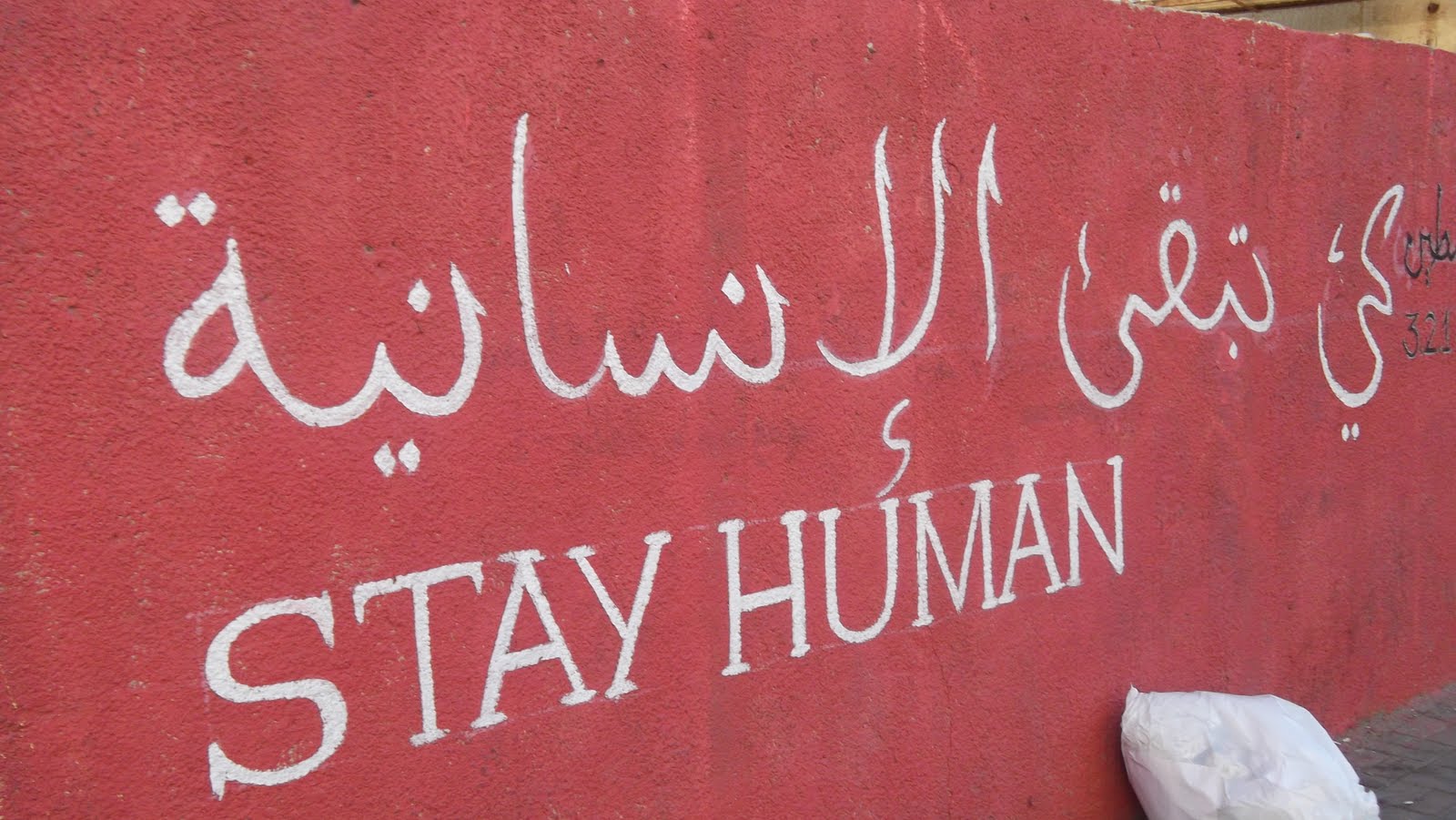
I got a pleasant surprise, albeit tinged with sadness, when this recent graffiti of him adorned one of Ramallah's walls. His motto, Stay Human, is written in Italian "Restiamo Umani".


Restiamo Umani
كي تبقى الانسانية
Stay Human

Sunday, April 17, 2011

TedxRamallah

Inspire and be inspired. That's what it is ultimately about.

A good friend of mine put me in contact with the event's organizer, Ramzi Jaber. We exchanged emails, and he asked if I would like to be on the blogging team, to post on the TedxRamallah website during or after each session. I leaped at the chance-hello, graduating soon, must build up résumé- after informing my teacher to pretty please postpone my exam on Saturday. I admit I might have told her that the whole event rested on my shoulders and that it was imperative for me to go.

Heba was supposed to attend with me but she backed out at the last minute. Instead, it was just me and the mother. We got up at 6am, something we both haven't done in the longest time, and I busied myself with trying to find an economical way to dry my newly washed jeans. The iron wasn't working, neither was the hair straightener, the blow dryer would wake up the whole building...I considered just putting them on wet where they would sap my body heat, but in the end I turned on the soba and steamed them.

Even though the event is called TedxRamallah, it was actually held all the way in Bethlehem because the venue in Ramallah wasn't ready yet. We hurried through downtown and as we came into the parking lot where the buses were scheduled to be, we saw them slowly rumbling down past us. Shoot. Cue Mama griping how it was all my fault being late. Luckily, there was one micro-bus due to arrive shortly, and we climbed in with the other late arrivals gratefully. The hour and a half twisty turning trip began.

What is TED? It stands for Technology, Entertainment, and Design. The little x means that it is an independently organized TED event. From their website:
TED is a nonprofit organization devoted to Ideas Worth Spreading. Started as a four-day conference in California 25 years ago, TED has grown to support those world-changing ideas with multiple initiatives. The annual TED Conference invites the world’s leading thinkers and doers to speak for 18 minutes. Their talks are then made available, free, at TED.com. TED speakers have included Bill Gates, Al Gore, Jane Goodall, Elizabeth Gilbert, Sir Richard Branson, Nandan Nilekani,Philippe Starck, Ngozi Okonjo-Iweala, Isabel Allende and UK Prime Minister Gordon Brown. The annual TED Conference takes place in Long Beach, California, with simulcast in Palm Springs; TEDGlobal is held each year in Oxford, UK. TED’s media initiatives include TED.com, where new TEDTalks are posted daily, and the Open Translation Project, which provides subtitles and interactive transcripts as well as the ability for any TEDTalk to be translated by volunteers worldwide.

TED has established the annual TED Prize, where exceptional individuals with a wish to change the world are given the opportunity to put their wishes into action; TEDx, which offers individuals or groups a way to host local, self-organized events around the world, and the TEDFellows program, helping world-changing innovators from around the globe to become part of the TED community and, with its help, amplify the impact of their remarkable projects and activities.
The remarkable speaker line-up include Huwaida Arraf, who co-founded the International Solidarity Campaign, Steve Sosebee, the founder and CEO of the Palestine Children Relief Fund, Raja Shehadeh author of award winning Palestine Walks, Alice Walker the first African American woman to win the Pulitzer Prize, Suad Amiry architect and founder of Riwaq as well as the author of hilarious novel Sharon and My Mother in-Law, and many more. Providing the entertainment were Nazareth songbird Rim al Banna, hip hop group DAM, and-be still my fluttering heart- all round philanthropist, spoken word artist, and wager of beauty Mark Gonzales.

We arrived at the Convention Palace, and stood in the huge line to get our badges. After that I went inside with the other bloggers who were already firing up their laptops and ready to go. There wasn't a room or whatever to accommodate us so we had to sit in the last two rows on one side. I peered into my bag and grimaced. I decided to get it over with.

"My laptop is ancient so don't make fun of it. And the battery lasts for half an hour so I need to be near the socket."

To which the rest of the team replied:

"Hey, my battery lasts that long too."
"Yeah mine doesn't last that long either, we'll take it in turns to plug in."
"Or some of us could share a laptop since we all won't be writing at the same time."

Awesome, they weren't those annoying 'look-at-me! Ive-got-a-Mac-and-I-just-like-swiping-my-fingers-here-and-there-and-windows-will-magically-appear' types I half expected them to be. We settled down, and watched hundreds and hundreds of people file past us, going down the stairs and taking their seats.

The event was to be live-streamed to Beirut and Amman, with 17 other cities watching. The hosts Jameel Abu-Warda and Huwaida Arraf kicked things off with Raja Shehadeh being the first speaker. Some speakers couldn't make it to Behtlehem/Palestine in general because of their visas. Wael Attili was one of these victims and he spoke to us via Amman. He's the co-founder of the Kharabeesh network, where story-telling takes place through cartoons. Kharabeesh means "scribbles" in Arabic and Wael shared the story of how one day his little daughter proudly told her class that her dad works for Kharabeesh and went home crying because they all laughed at her.

I'm not going to describe each speaker since there are hundreds of thousands of tweets that already did that, but I'll just pick the stand-out talks I really enjoyed. Huwaida Arraf managed to get all us teary-eyed as she talked about Vittorio Arrigoni, a man she personally knew, and described him as a beautiful soul who was more Palestinian than other Palestinians. It really is depressing to lose such a monumental activist, a man who had a larger than life personality and was simply passionate about Palestine. Activists don't come like that every day.
Fadi Ghandour, the CEO for Aramex and founder of Ruwwad for Development shared his experiences with his attempts to better the community of Jabal al-Nathief located in Amman. There are 75,000 people living there and only 62 trash cans. Jabal al-Nathief (Mountain of Clean) is filthy. That means 1209 people for every one trash can. So the first thing Ruwwad did was to instill more trash cans. However there was a dire lack of facilities and institutions. There wasn't even a police station. And so Ruwwad got to work, opening up a library that kids voluntarily choose to enter, an IT lab that gives free lessons to all, improved classrooms, a project to get children to read for 6 minutes every day-after some UN organization concluded that the average Arab child reads for 6 minutes a year. Handicapped people weren't left out either; they made use of their hands and learned how to make pottery, recently putting on an exhibition for the first time. But it wasn't all easy sail as Fadi faced a lot of prolonged delays and uncooperative behavior from the thousand and one Jordanian ministries who like to hoard money and now and then sprinkle out a few coins to the plebeians.
Mohamed El Dahshan is a writer and economist who blogged up the revolution in Egypt from the very first day. He earnestly relayed to us how the impressive aerial shots of Tahrir Square failed to capture the true essence of the revolution: the up close and central lives of the partaking people. As Mohamed said, "I think we had the funnest revolution ever."
Julia Bacha, the Brazilian filmmaker also made an absorbing speech at which point I was loudly but internally cursing my laptop, myself, and the whole Internet nation since the two pieces I had written so far disappeared into oblivion, which meant I missed much of Julia's talk about how cognitive dissonance brings about change.
Munir Fasheh, a professor at BZU had us all in stitches as he eloquently and entertainingly made his argument. The education system here in Palestine simply stunts the intellectual growth of students, and yet it is so institutionalized that any improving factor from the outside is considered detrimental and unacceptable.
Mark Gonzales equals amazing, end of. Mama enjoyed his performance a lot more than she did for DAM's, whom she called "imsak3een". Well their last song (I'm In Love With a Jew) was pretty terrible.
Khaled Sabawi, the president of MENA Geothermal (green energy) delivered a highly informative presentation. Basically, Palestinians pay the highest prices for energy in the entire region; 97 percent of the energy they consume is exported; in a few years Palestinians will be living through congested smog worse than Mexico's, but fear not! When there's a will there's a way. Enter geothermal energy. The earth consumes 50 percent of the sun's rays, and two meters below ground the temperature year round stays at 17 degrees Celsius. Pipes underground could be used to extract temperature via a cooling process in summer and a heating process in winter. The Israeli Interior minister wrote Khaled, "We could learn a lot from you." So as a result he was barred from entering Palestine three times, an engineer his company had worked on training was arrested and held in solitary confinement for 2 months on no charges, all for the sake of ensuing that the quality of Palestinian life remains miserable and backward.
Alice Walker stood on the stage and told the audience how she ended up speaking to the Israeli soldier who was interrogating her at the Allenby border crossing like she would to her son: "Do you know what you are doing? This [occupation] isn't good for you." The soldier was pulling up everything she had ever said about Israel and said, "Look, it says here you boycott Israel, that you would never come and visit it" to which she smoothly replied, "I'm not visiting Israel, I'm here for Palestine." She asked him if he thought that peace could ever be possible between the Israelis and Palestinians, and he answered honestly, "No. There's too much hatred on both sides."

After the event was over, Mama went up on-stage to talk to some of the speakers while I was wistfully thinking of food and fighting the urge to hoist my jeans up which had magically turned three sizes bigger. She had already talked to Khaled and Sam Bahour, both family friends, as well as Mounir Fasheh. She set her eyes on Alice and managed to get through the hungry fans. She then proceeded to tell Alice her life story, the whole ugly narrative of my family's displacement because we all don't have the correct Israeli issued IDs, how as a result my dad can't come in and is living in a different country. "So hating the Israelis for what they did to me and my family is something I can't help, you know?" Alice had an expression of pain on her face. She put her hand on Mama's shoulder and said, "I know. I know. Believe me I do. I'm from the deep South, where they had all kinds of apartheid laws there, and for a while I hated the whites too. But I got really sick. And I don't want that to happen to you, I don't want you to hate until you get physically sick." Then she was bombarded by the event's volunteer kids and disappeared for a moment. She then called out, "Hold on, I want to hug you. I would really like to give you a hug." And so they embraced. Women. So proud to be one.


We walked out, and brought a couple of books-Vittorio's Stay Human about Operation Cast Lead which he had witnessed from the ground, and Ben White's Israeli Apartheid. I went into a frenzy seeing all the books as usual, but contented myself with the knowledge that Ghada Karmi's books had to be in at least one of the three libraries on campus, unlike Edward Said's The Question of Palestine which they conveniently "lost". I asked Mama what she thought of TedxRamallah.
"It's nice, really enjoyed myself. Most of the speakers had really good speeches. Maybe next year I can be one of them?"

We climbed into one of the coaches, and I popped in my headphones, unbelievably tired. Mama was still enjoying herself as she was conversing with the other people around us. I turned off my iPod and listened to them talk. There's Maysar, sitting two seats down, who is a genius. He showed us all on his phone the gamma robot he had designed and invented, and told us how most of his professors at his university (Al-Quds/Abu Dis) discouraged him and were totally unappreciative of his project, despite him being the smartest sophomore in his department. They didn't like how he had used 'unconventional' methods to build the robot, and how his calculations weren't written down but were done mentally. This brought us back to Mounir Fasheh's speech, and how the method of intellectual stumping was all too glaring. We all encouraged Maysar, telling him to forget his teachers and to continue building/inventing more robots because sooner than later someone will recognize him and he will go on to achieve greater things. If only those idiotic professors of his realized what a truly talented student they have on their hands and to do nurture him instead of shooting him down because he dared to think outside the box. As we rumbled past Qalandia checkpoint, Maysar passed his notebook around and we all wrote supportive messages.

Inspire, and be inspired. Roll on next year!

Wednesday, April 6, 2011

RIP Juliano Mer Khamis


Juliano Mer Khamis was killed after unknown assailants fired 5 bullets in his body on April 4th in front of the Freedom Theater in Jenin, which he founded back in 2006. He was in his car, next to his two year old son. [His wife is pregnant with twins.]

His documentary Arna's Children won the Tribeca Film Festival award. An interview published posthumously is found here.

Born to a Jewish mother and a Palestinian father, he proudly described himself as the impossible: one hundred percent Jewish, one hundred percent Palestinian.

Ramallah staged a demonstration for Juliano, pictures here.

Nathalie Handal wrote a beautiful, touching poignant tribute.


To Juliano Mer Khamis


This is to you
who came to us with the thirst of a river
This is to you
who delivered wings, then praise,
then a thousand hands on a stage
This is to you
who deafened conflict
like a wall of whispers
building a different nation
you lined them up—Fatima, Mohammad, Yasir, Sahar
said, departure starts the first place you create
the word has a way
the way a sign
the sign a heart
the heart a place
a place that places parts
into what can’t be disturbed
This is to you
who held a village on a whisper
whispers in a butterfly
your mother in a rose
your father everywhere trees grow
don’t follow the stray souls
don’t follow death
you’ve rehearsed it enough
remember
all the plays that lie in between
here you gathered wounds and made a stage
gathered curtains and made a museum
here you took the distance away from eyes
the hard beating of drums away from ears
and you forced fire to burn elsewhere
This is to you
This is to your son
who will never forget the sound of 5 bullets
or the blood drowning the seat
but who will remember first how you played
This is to you who told us
to ask death questions
This is to you
This is to you
This is to you
who created freedom on a stage

Tuesday, February 15, 2011

Singing the Praises of Ayman Mohyeldin

Early on during the Egyptian Revolution, we were enamored with dear Ayman. Julian Assange who? Move over there, it only took us about a month before we found ourselves agreeing with Robert Fisk assessment that Assange was indeed a man who entitled himself to a great deal of self-importance.

Ayman's clear cut analyses and top notch reporting has led us to discuss his physical status and jacket choices, which made our parents permanently switch back to the Al Jazeera Arabic channel instead. Still, it was nice while it lasted, and his being half Palestinian doesn't hurt his case at all.

A couple of interviews we eagerly lapped up before we remembered that the crush had faded:

The Daily Beast talks to him about...stuff.

This New York Magazine query stirred the feathers of a few righteous people because Ayman mentioned their silver fox Anderson Cooper. Somehow they automatically took it to be a diss on Anderson's part. Eh.


Oh, and apparently our knack for putting links here and there isn't going to end anytime soon.


  • We've seen this before on many articles, but this one sums it up pretty nicely. The winners and losers of the Revolution.

Tuesday, February 8, 2011

Offendum on Al Jazeera

Because we adore you.


Egyptian rapper? Faiiil.

Also...rosaries as necklaces. Not big fans of. That's just the superficiality coming out of us though ;)


#Jan 25 Egypt, featuring Offendum, The Narcycist, Amir Suleiman,Ayah, and Freeway.


Since our souls are uncovered right now...we've heard better songs about revolutionary Egypt. Still love you guys though!

Sunday, January 16, 2011

Vanessa Paradis Boycotts Israel

We're confused. We don't know how to deal with our feelings right now. It's not enough that French singer Vanessa Paradis still has her unclenching fists on our man Johnny Depp, but that she has the nerve to procreate two children from him? Our hearts are bleeding, and have been for some time. And now, a new complication. She has cancelled her gig in Israel for "professional reasons" i.e. she has heeded the BDS call but doesn't want to be accused of anti-Semitism so she won't come right out with a statement beginning with "Due to Israel's ongoing illegal occupation of the Palestinians and their blatant disregard for international law capitalized upon by for example attacks on peace activists as was the case on the Turkish humanitarian aid ship the Mavi Marmara, I won't be performing my concert in Israel due to the Palestinian civil society call for the boycott of etc etc..."

So even though she's afraid to jeopardize her career by not admitting straight up the reason for her cancelled gig-unlike Gill Scott-Heron and Elvis Costello- we grudgingly respect her for pulling out anyhow.

It was so painful typing that.

Around 30 activists gathered in front of the theater Conflans-Sainte-Honorine calling on Paradis to boycott Israel and to distribute leaflets to spectators, and as trolls would tell you it's either peer pressure (probable) or anti-Semitism (definitely) that finally swayed her mind. She was supposed to perform February 10th accompanied by luscious man Johnny, and if that actually went through we would have never lived sanely again.

Wednesday, January 12, 2011

Ken Loach Comes to Ramallah

In coordination with each other, Yabous Productions and Philistine Films worked hard to get renowned British film maker Ken Loach to Palestine.

Ken Loach is awesome. He refused an OBE long before we were born (1977) citing:
"It's all the things I think are despicable: patronage, deferring to the monarchy and the name of the British Empire, which is a monument of exploitation and conquest."

His movies reflect his socialist views such as homelessness, worker's rights, oppressed citizens, etc. He is a strong supporter of the BDS campaign and has called for the boycott of Israeli cultural institutions. He has boycotted the Melbourne Film Festival as well as the Edinburgh International Film Festival, which lead to the organizers of the latter to return the three hundred pounds grant it received from the Israeli Embassy to fund an Israeli director's visit. Loach saw his actions as morally compatible:
“The massacres and state terrorism in Gaza make this money unacceptable. With regret, I must urge all who might consider visiting the festival to show their support for the Palestinian nation and stay away.”

Loach, along with long time collaborators producer Rebecca O'Brien and screenwriter Paul Laverty arrived at the Ramallah Cultural Palace after 6pm on Tuesday, owing their delay to their travelling from the Allenby Bridge the same day. After their introductions were briefly made, Haider Eid of PACBI from Gaza welcomed them via pre-recorded message. Anne Marie Jacir of Philistine Films then took to the stage heaping praise on the three stooges and explaining her endeavor to get them to Palestine for the first time ever. The three went on stage and Ken Loach succinctly described their first few hours in the West Bank, and their shock at the first sight of the Apartheid Wall, at its immensity and glaring illegality.

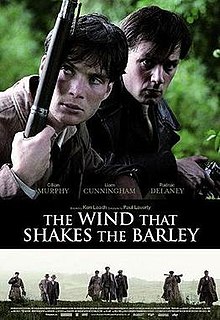
Without further ado, the crowd settled down to watch "The Wind That Shakes The Barley", a film about Irish independence and the subsequent civil fighting in the early 1920's. I love Ireland for its history, which so strongly parallels Palestine's, for its dialect, and for its hot men. Had to get superficial there. Even though Cillian Murphy scares the crap out of me because of his strongly innocent face (curses upon you, Red Eye), I loved his hair. He's a foine actor that's for sure. Anyway, not wanting this to sound like a movie review but more of an account, Damien O'Donovan (Cillian) is a doctor headed to London in 1920, but after witnessing the Black and Tans brutal beating of a railway guard and the train driver, he heads back to join his brother's ad hoc unit of the IRA. They fight against the British, whom they recognize as viewing Ireland only as a tiny dollop in the overall British empire. After 'independence' is gained (a permanent ceasefire between the British forces and the IRA), the Peace Treaty is then put forth, and this had the same effect on the Palestinians when the Oslo Accords were signed. First of all, the people, the citizens, were not included in the decision-making. Their opinion and their assent were completely disregarded. Secondly, the Peace Treaty gave the Republic of Ireland the status of a self-governing dominion that would be part of the British empire. This divided the IRA members. Some, like Teddy (Damien's brother) accepted the treaty as a foreground in which later gains would be accessed through negotiations. Others opposed it on the basis that they fought this long and hard for a completely independent Irish state, and nothing less would do. These people would certainly not swear allegiance to the English king.That's like saying we can have our own Palestinian state but must take the Jewish Loyalty Oath. I watched Liam Neeson's "Michael Collins" a couple of times, so my background information was adequate, and although I could certainly understand Collin's perspective, I was also sympathetic to the anti-Treaty IRA cause. I was forcibly reminded of Arafat's complacent decision, whose motives were purely monetary, to rule a pseudo Palestinian state under the control of the Israeli occupation. What good has come out of that? It's been mentioned before on this blog, but what the Oslo Accords did was to legalize Israel as a state and its occupation. The civil war between the Irish was not unlike that between Hamas and Fateh back in 2006, where even brothers were turned against each other. I'm not going to give away the ending, but it's depressing as hell.


L-R: Laverty, Loach, Barghouti, and O'Brien

After the movie ended, 15 minutes were allotted for questions by the audience and answers by Loach, Laverty, and O'Brien, who were joined by BDS co-founder Omar Barghouti. Loach emphasized the importance of unity, and pointed to the experience of Ireland, where if you are divided, you fail. Women also had a huge role to play in the Irish War of Independence, as they provided support and intelligence, among other things. While Laverty was doing his research for the movie, he came upon a quote from some British officer in 1920: "We will not be able to defeat the Irish. We must get the Irish to defeat the Irish." Who else but the US and Israel are profiting from the schism between Fateh and Hamas? Who was it that trained and financed the Fateh members to use what they learned against their brothers? It's unnerving to see the stark comparison between Palestine and Ireland, proving once again that history does repeat itself. Did you know that Lloyd George and his government, who put forth the Peace Treaty, were the same government that issued and backed the Balfour Declaration?

Imperialism sucks.

Friday, December 17, 2010

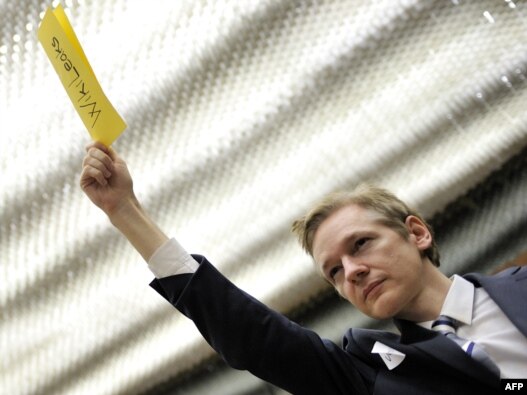
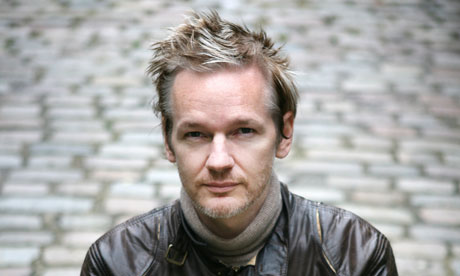
Julian Assange Granted Bail


Confession here. We had a crush on his name, and now we think we have a crush on the man himself. Which is totally weird. Because he's like, the prototype of everything that goes against our exhausting list of what a man should look like. But there's something so sweet and so vulnerable in his childlike soft face we can't help but want to pet the TV screen whenever he shows up on there. Plus his hair is mad cool. Yeah.

Anyway, his bail was a whopping quarter of a million pounds, provided for by supporters. He spent ten days in solitary confinement in a Victorian cell which sounds highly unpleasant. He'll be back in court January 1st to fight against the non-existent evidence tying him to accusations of sexual assault on two Swedish women. Meanwhile he has to wear an electronic tag, observe strict curfew, and report to a police station on a daily basis.

Do we dare post something corny like "The truth shall set you free" and hope against all hope that this might actually come true? It's hard being optimistic about this, especially with the virulent US reaction who want to try sweet Julian for espionage and see nothing perverse in murdering him. Oh, that great upholding nation of freedom of speech and investigative journalism.

The Truth Will Always Win. His words not ours, so we're saved from the corniness.

Thursday, December 16, 2010

Ben Brown is a Gimp, Jody McIntyre is No Wimp

Our beloved man Jody McIntyre has been at the forefront of the London student protests, expressing along with thousands of others his strong disapproval-to put it mildly- of the increase in student tuition fees to up to nine thousand pounds annually. His ever excellent blog has covered the protests in detail, and now more than ever he has been at the center of the media light because of what happened during the last protest last week. Jody and his brother were in the front crowd in Parliament Square opposite a legion of armed police officers. The first completely unprovoked incident saw police officer KF963 strike Jody on the shoulder with a baton. The second incident initiated by KF963 was a four man attack on Jody as the commendable police officers dragged Jody off from his wheelchair about a hundred meters. Did we mention Jody has cerebral palsy? And that, as he so adequately put it himself, "Do you really think a person with cerebral palsy in a wheelchair can pose a threat to a police officer who is armed with weapons?" The disgusting despicable vermin who calls itself Ben Brown makes a very strong case for Douchebag of the Year Award with his highly accusatory questions, fascist tone, and rankling rude interruptions, but Jody is not surprised at all by the idiot's actions:
It just grates us how Brown insinuates that because Jody identifies himself as a "revolutionary" then that made it all the more justifiable for the police-scratch that, pigs- to assault him. A revolutionary is just a word, not a physical action, says Jody and everyone else with a brain. Reason seems to have departed permanently from Brown's vacuous mind as he angles for the victim of police brutality as a dangerous threat to the precious police whose role, might we needlessly add is obviously to protect the government and not its citizens.


But we applaud Jody for the great job he has done with dealing with those "embedded" journalists, here's another video where he owns those cretins.


Much love and respect ya zalameh! And don't worry, we won't be focusing on the horrible way you were treated, but to contextualize it as you said with the larger issue here which is of course the abominable increase of tuition fees.

"Just as I was unseated from my wheelchair I hope that every member of this government will also be unseated." WORD.

Wednesday, December 15, 2010

Right of Return Anniversary Sucks

December 13th- The impotent UN and its 194 Resolution have marked 62 years since its conception. The Right of Return looks as close to fruition as old man Abbass looks to dying, which given his deal with the devil is a heart wrenching never. Palestinian academic Ghada Karmi speaks about Ben Gurion's hope that "The old will die and the young will forget." 7 million Palestinian refugees ain't that willing to do so.


You can also read Saeb "Shalom to you in Israel, we have failed you" Erekat's article on the subject but it reeks of unbelievable hypocrisy, given his role as Legitimizer of Israel's Occupation, aka Negotiator.

Tuesday, December 7, 2010

Happy New Year!


This week marks the last one of classes before our finals start on Saturday. However, we've been enjoying a couple days off due to the Ministry administered strike on Monday and the Islamic new year (hijra) today. That's 1432 years since the prophet PBUH first made the journey from Mecca to Medina.

And since we're in such a reflective mood, here's what's been sweeping the world this week:


Something small called Wikileaks. Thousands of classified private US documentations have been made public to the entire world, which of course is doing wonders to the US foreign relations. See what they think of world leaders here, and read the brave founder of the website, Julian Assange (great name!) answers to the public's questions. The US have gone on a haters' mission to besmirch Assange's reputation therefore his credibility and/or to see him safely behind bars, and/or...assassinated. The besmirching has already begun-the ridiculous accusations of rape and other sex offences committed by him during his last visit to Sweden in August. The case has highly conspicuous political undertones, and today Assange was refused bail and will remain in custody until December 14th, where he will continue to refuse his extradition to Sweden. One of the six people ready to offer him surety was film maker Ken Loach-who earlier this year boycotted the Melbourne International Film Festival because of its sponsorship from Israel-and was willing to offer 20 thousand pounds in bail. Stay strong, be safe.

The raging wildfire that has consumed Mount Carmel in Haifa was finally put out on Sunday after leaving more than 40 people dead and thousands of evacuees. Israel's poorly unprepared forces were no match as it pleaded to countries all over the world to aid them (since the neighboring countries supposedly loathe them), but they needn't have feared as the imbecilic PA fire-fighters lost their balls and strapped on their boots to help. Because Israel would do the same for us huh. As always, we are astounded by the new levels of depravity that the PA sink to. The best Israel can do as to find who the culprit is is to arrest four teenage boys, boohoo. Anyway, we liked Gilad Atzmon's take on how the JNF's plans to "reclaim" the land back in the 1930's came and bit Israel right on the ass last week.

Several Latin American countries have recognized Palestine's right to exist. Brazil, Argentina, and Uruguay (due next year)-thanks, you're about 60 years too late. Unsurprisingly, Bibi and his cronies are not too happy with those decisions, muttering something about how this will upset the balance of peace negotiations or some crap like that.

Old man Abbas has threatened to dissolve the PA if the settlement freeze doesn't get extended yada yada yada. Empty threats, silly notions, must be all those blue pills he's been munching on. And no this piece of news doesn't warrant a link.

Tuesday, November 9, 2010

Young Jews Disrupt Netanyahu Speech

These Jewish peace activists, who have just launched their website youngjewishproud.org heckled Netanyahu's speech to the General Assembly of Jewish Federations which was held in New Orleans. No words to describe how we felt, just got goosebumps all over again. What a brave, uplifting stance. And such a rabid hostile crowd. The first dissenter was shouted at to "Get out! You're an embarrassment to the Jews get out!" For the second disruption a man can clearly be heard repeatedly saying "You're an asshole...you're an asshole get the fuck outta here piece of shit", another ripping the damnable banner with his own bare teeth to rapturous applause and whooping, and the rest of the crowd downing out the dissenters with feral yelling that reminded us of a little kid screaming "I'm not listening I'm not listening!"

Young Jews Disrupt Netanyahu at Jewish General Assembly from stefanie fox on Vimeo.


The Loyalty Oath delegitimizes Israel

The Occuopation delegitimizes Israel

The Settlements delegitimize Israel

The Siege of Gaza delegitimizes Israel

Silencing Dissent deletigimizes Israel

The crowd are refusing to listen to cold hard fact. They are willing to lie to themselves for the rest of their lives about the wonderful democratic state of Israel whose self-victimization as a result of its hideous war and criminal crimes it commits on a daily basis is justifiable all in the name of security and defence, and refuse to heaven forbid enlighten themselves with the story of the Other. Ilan Pappe yesterday mentioned something about this, quoting two Haaretz journalists' response to why Jews are so uncaring and so self-righteous in their deranged beliefs. One, as told by Amira Hass, was because Jews simply do not want to know the reality of their own state, and two, as told by Gideon Levy, was because Jews do not know enough. Pretty sad, but the Jews in that so-called intimidating crowd do NOT represent the Jews of the world, and we are very much grateful to peace-loving organizations such as Jewish Voice for Peace.

Below is a video of the amazing dissenters. Worldwide coverage is what is needed.